
7 Powerful Facts: Who Needs Cosmetic Skin Treatments in 2026
Cosmetic skin treatments can help people address visible skin concerns, improve skin texture, and maintain a more refreshed appearance. In Thrissur, cosmetic skin treatments are increasingly considered by people who want professional solutions for concerns that may not improve with regular skincare alone.
But who actually needs cosmetic skin treatments? These treatments are not limited to a particular age group or skin type. People may consider them for concerns such as pigmentation, acne scars, uneven skin tone, fine lines, sun damage, enlarged pores, dullness, or changes in skin texture.
Cosmetic procedures should always be selected according to individual skin characteristics, concerns, expectations, and professional assessment. Some people may need a targeted procedure, while others may benefit more from a consistent skincare routine.
Understanding the reasons for considering treatment can help you make a more informed decision.
Who Needs Cosmetic Skin Treatments
The answer depends on the specific skin concern rather than simply age or appearance. Cosmetic skin treatments may be suitable for adults who have persistent aesthetic skin concerns and want professional care.
People may consider cosmetic treatment when:
- Skin pigmentation is difficult to manage with skincare
- Acne scars remain after active acne has improved
- The skin looks dull or uneven
- Fine lines have become more noticeable
- Sun damage has affected skin appearance
- Skin texture feels rough or irregular
- Enlarged pores are a persistent concern
- Certain marks or blemishes affect confidence
- Regular skincare has produced limited improvement
- A person wants professional guidance for skin rejuvenation
The important point is that cosmetic treatment is generally elective. It should be considered after understanding the expected benefits, limitations, possible side effects, and appropriate aftercare.
Who Needs Cosmetic Skin Treatments for Pigmentation
Uneven pigmentation is one of the common reasons people explore cosmetic skin treatments. Dark spots can develop because of several factors, including sun exposure, hormonal changes, previous inflammation, and skin injuries.
People with persistent pigmentation may consider professional treatment when topical skincare has not provided the desired improvement.
Common pigmentation concerns
Cosmetic treatment may be considered for:
- Dark spots
- Uneven skin tone
- Sun spots
- Post-inflammatory pigmentation
- Certain forms of facial pigmentation
- Mild to moderate discoloration
Treatment options vary depending on the cause and depth of pigmentation. A professional assessment is important because different pigmentation conditions require different approaches.
Sun protection is also essential. Without adequate protection from ultraviolet radiation, pigmentation may return or become more noticeable after treatment.
Who Needs Cosmetic Skin Treatments for Acne Scars
Acne may disappear, but the marks or scars left behind can sometimes remain for years. People with persistent acne scars may consider cosmetic skin treatments to improve the appearance and texture of affected areas.
Different types of acne scars respond differently to treatment.
Common acne scar types
They include:
- Depressed scars
- Rolling scars
- Boxcar scars
- Certain raised scars
- Post-acne marks
Cosmetic procedures for acne scars may include treatments designed to encourage collagen production, improve skin resurfacing, or reduce visible irregularities.
The appropriate approach depends on scar type, skin condition, pigmentation tendency, and treatment goals. Multiple sessions may sometimes be required rather than a single procedure.
Who Needs Cosmetic Skin Treatments for Uneven Skin Texture
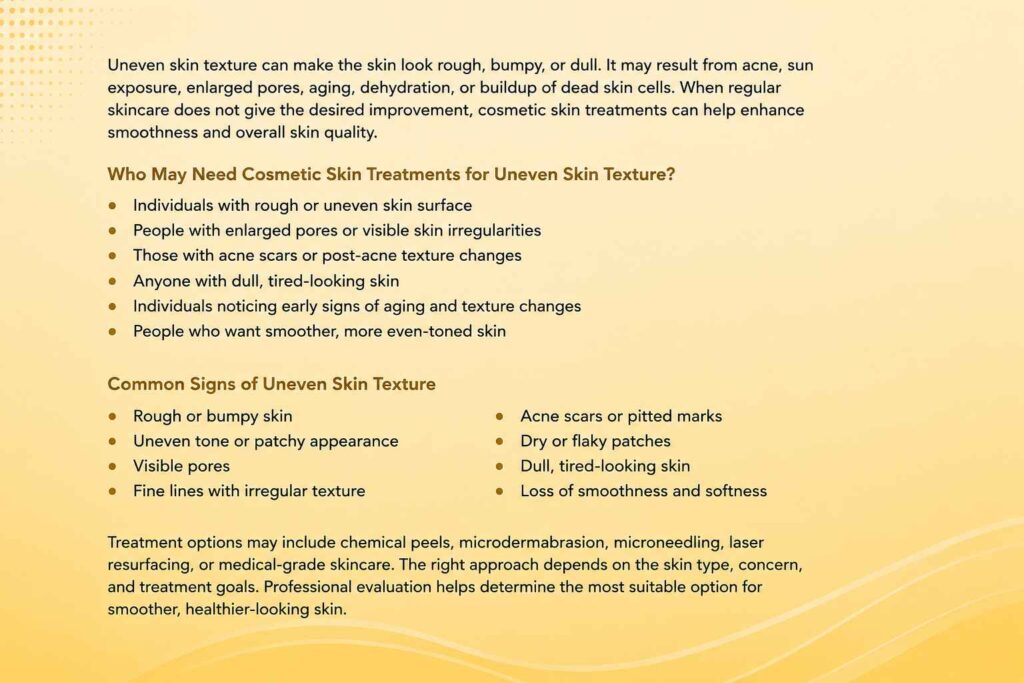
Smooth skin texture can change because of acne, sun exposure, dehydration, enlarged pores, ageing, and other factors.
If the skin surface appears rough or uneven despite a suitable skincare routine, cosmetic skin treatments may be considered.
Treatment may aim to:
- Improve surface smoothness
- Reduce the appearance of certain scars
- Refine overall skin texture
- Support collagen production
- Create a more even-looking complexion
However, cosmetic treatment does not automatically produce flawless skin. Realistic expectations are important when deciding whether a procedure is appropriate.
Who Needs Cosmetic Skin Treatments for Fine Lines
Fine lines are a natural part of skin ageing. They may become more visible because of reduced collagen and elastin, repeated facial movements, sun exposure, and changes in skin hydration.
People who are concerned about early or visible signs of ageing may explore cosmetic skin treatments.
Depending on the concern, professional options may focus on:
- Skin rejuvenation
- Collagen stimulation
- Improving skin texture
- Reducing the appearance of selected lines
- Supporting a healthier-looking complexion
Treatment selection should be individualized. Not every anti-ageing procedure is suitable for every person, and some concerns may respond well to skincare and sun protection alone.
Who Needs Cosmetic Skin Treatments for Sun Damage
Regular sun exposure can contribute to visible changes in the skin. These may include uneven pigmentation, rough texture, fine lines, and a generally dull appearance.
People who spend considerable time outdoors or have developed visible signs of cumulative sun exposure may consider cosmetic skin treatments.
However, treatment should not replace sun protection.
Daily protection can help reduce further ultraviolet damage. Depending on individual needs, this may include:
- Broad-spectrum sunscreen
- Protective clothing
- Hats
- Seeking shade during strong sunlight
- Limiting unnecessary prolonged sun exposure
A combination of prevention and appropriate cosmetic care can provide a more practical long-term approach to maintaining skin appearance.
Who Needs Cosmetic Skin Treatments for Enlarged Pores
Enlarged pores can become more noticeable because of genetics, excess oil, ageing, reduced skin elasticity, and accumulated debris.
Although pores cannot usually be permanently eliminated, their appearance may sometimes be reduced through appropriate skincare and professional cosmetic procedures.
People may explore treatment when enlarged pores are accompanied by:
- Oily skin
- Uneven texture
- Blackheads
- Acne-related changes
- Reduced skin firmness
A professional assessment can help determine whether a cosmetic procedure or improved skincare routine would be more appropriate.
What Types of Cosmetic Skin Treatments Are Available
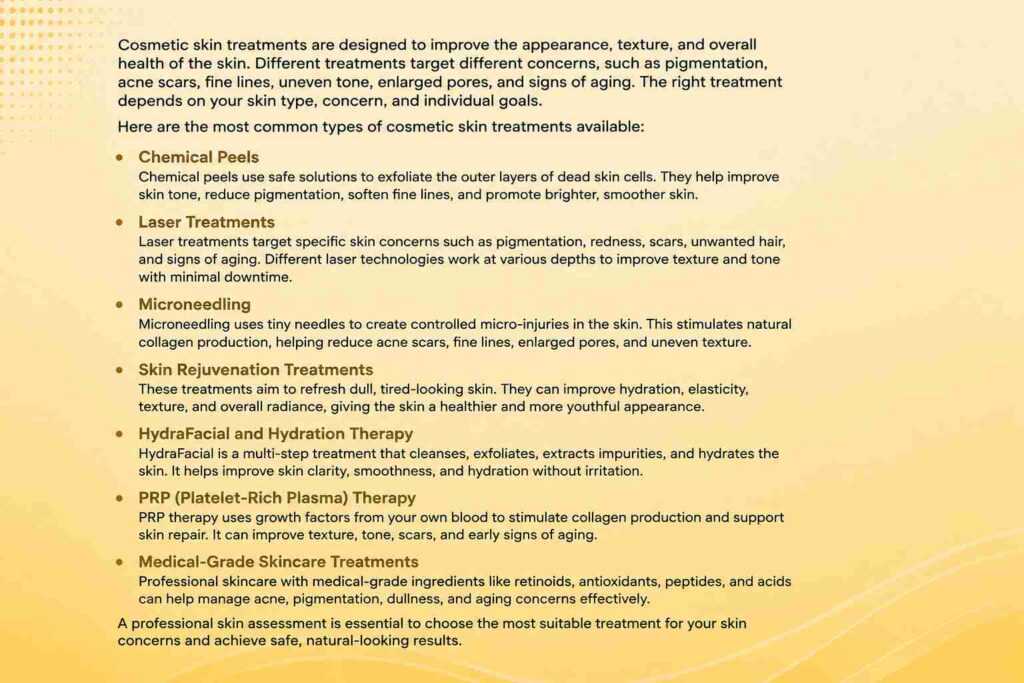
The term cosmetic skin treatments covers a wide range of procedures. The right treatment depends on the specific concern and the individual’s skin.
Chemical Peels
Chemical peels use carefully selected substances to exfoliate controlled layers of the skin. They may be considered for certain pigmentation concerns, uneven texture, acne-related changes, and overall skin rejuvenation.
Laser-Based Treatments
Certain laser treatments can target specific skin concerns, including pigmentation, unwanted vascular changes, or textural irregularities. The type of laser and treatment settings must be selected according to the individual.
Microneedling
Microneedling uses fine needles to create controlled micro-injuries in the skin. This process may stimulate collagen production and can be considered for certain acne scars, fine lines, and textural concerns.
Skin Rejuvenation Procedures
Different professional treatments may be used to improve the overall appearance of ageing or tired-looking skin. The treatment chosen depends on the condition of the skin and the desired outcome.
Medical-Grade Skincare
In some cases, professional skincare may be sufficient. Ingredients such as retinoids, antioxidants, exfoliating acids, and pigment-regulating agents may be recommended depending on the concern and skin type.
What Are the Benefits of Cosmetic Skin Treatments
The benefits vary depending on the procedure and the condition being treated. Cosmetic skin treatments may help improve specific visible concerns and support a more even, refreshed appearance.
Potential benefits include:
- Improved skin texture
- More even-looking skin tone
- Reduced appearance of selected pigmentation
- Improvement in certain acne scars
- Smoother-looking skin
- Reduction in the appearance of some fine lines
- Improved overall skin appearance
- Greater confidence about skin appearance
Results are not identical for everyone. Skin type, age, lifestyle, treatment selection, and adherence to aftercare can all influence the outcome.
What Symptoms or Skin Concerns Suggest Treatment May Help
Cosmetic skin treatments are usually considered for appearance-related concerns rather than symptoms of an underlying medical condition.
Common concerns include:
- Persistent dark spots
- Uneven complexion
- Acne scars
- Rough skin texture
- Visible fine lines
- Sun-related skin changes
- Enlarged pores
- Dull-looking skin
- Mild loss of skin firmness
If a skin change is new, rapidly changing, painful, bleeding, itchy, infected, or otherwise unusual, cosmetic treatment should not be the first step. Such changes may require medical evaluation instead.
How Is the Right Cosmetic Treatment Selected
Choosing a procedure based solely on advertisements or social media trends may lead to unrealistic expectations. A professional skin assessment is a better starting point.
The evaluation may consider:
- Skin type
- Skin tone
- Main concern
- Previous treatments
- Current skincare products
- History of pigmentation or scarring
- Sensitivity of the skin
- Desired results
- Recovery time
- Possible risks
A treatment plan should be based on the individual’s needs rather than simply choosing the most popular procedure.
What Should You Consider Before Cosmetic Skin Treatments
Before undergoing a cosmetic procedure, understand exactly what the treatment is intended to achieve.
Important questions include:
- What problem is the treatment addressing?
- How many sessions may be required?
- What results are realistic?
- What are the possible side effects?
- Is downtime expected?
- What aftercare is necessary?
- Could pigmentation or irritation occur?
- Are there alternative treatments?
- How should skincare be adjusted before and after treatment?
Understanding these factors can make the treatment experience more predictable.
What Should You Do After Cosmetic Skin Treatments
Aftercare plays an important role in protecting the treated skin and supporting recovery.
Depending on the procedure, aftercare may involve:
- Using sunscreen as recommended
- Avoiding excessive sun exposure
- Keeping the skin appropriately moisturized
- Avoiding unnecessary exfoliation
- Following prescribed skincare instructions
- Avoiding picking or scratching treated areas
- Temporarily avoiding products that may irritate the skin
The exact aftercare instructions depend on the procedure performed. Following professional guidance is preferable to experimenting with products immediately after treatment.
Who May Not Be a Suitable Candidate
Not everyone who wants cosmetic improvement should immediately undergo a procedure.
Treatment may need to be postponed or reconsidered when:
- The skin has an active infection
- There is significant irritation or inflammation
- Expectations are unrealistic
- The actual skin concern has not been identified
- The person is not able to follow aftercare instructions
- Certain medications or health circumstances may affect treatment safety
A professional evaluation helps identify potential contraindications and determine whether another approach would be safer or more suitable.
How Can You Prepare for Cosmetic Skin Treatments
Preparation depends on the procedure, but general preparation can include maintaining a simple skincare routine and avoiding unnecessary irritation.
Before treatment:
- Discuss your complete skincare routine
- Mention previous cosmetic procedures
- Share relevant medication information with the treating professional
- Avoid unnecessary aggressive exfoliation
- Follow any specific pre-treatment instructions
- Protect your skin from excessive sun exposure
Do not start or stop prescription products without professional guidance.
Tips for Maintaining Results
Cosmetic procedures are not a replacement for everyday skincare. Maintaining healthy habits can help preserve improvements and reduce additional skin damage.
Useful skincare habits
- Apply sunscreen regularly
- Cleanse the skin gently
- Use suitable moisturizers
- Avoid excessive scrubbing
- Maintain adequate hydration
- Avoid picking acne or blemishes
- Follow a consistent skincare routine
- Use active ingredients according to professional advice
Lifestyle factors such as sleep, nutrition, stress management, and avoiding smoking can also influence overall skin health.
Common Mistakes to Avoid
People sometimes expect immediate or permanent results from cosmetic procedures. This can lead to disappointment.
Avoid:
- Choosing a treatment only because it is trending
- Comparing your results with edited social media photographs
- Expecting one session to correct every concern
- Ignoring sun protection
- Using harsh products during recovery
- Picking or scratching treated skin
- Skipping recommended follow-up care
- Assuming a more aggressive treatment is always better
Good cosmetic care should focus on appropriate treatment, realistic expectations, and skin safety.
When Should You Consider Professional Advice
Professional advice can be useful when a skin concern is persistent, affecting confidence, or not improving with appropriate home care.
An assessment may help determine whether you actually need a cosmetic procedure or whether a simpler skincare approach could be sufficient.
Professional guidance is particularly valuable when multiple concerns exist at the same time, such as acne scars combined with pigmentation or ageing-related texture changes.
The goal should be to identify the most appropriate option rather than automatically choosing a procedure.
Conclusion
Cosmetic skin treatments may be appropriate for people who want professional help with persistent concerns such as pigmentation, acne scars, uneven skin texture, fine lines, enlarged pores, and visible sun damage. The most suitable treatment depends on the individual’s skin condition and desired outcome.
Rather than selecting a procedure based on trends, it is better to identify the specific concern, understand available options, and set realistic expectations. Good skincare, sun protection, appropriate treatment, and proper aftercare all contribute to better long-term skin appearance.
If you are considering cosmetic skin treatments in Thrissur, a professional skin assessment can help determine whether treatment is appropriate and which approach best matches your individual needs. You can learn more about cosmetic procedures and skin health from the American Academy of Dermatology (AAD), which provides reliable information on cosmetic dermatology treatments and skin care.
Frequently Asked Questions

Dr. Arathy Jerald
Dermatologist & Cosmetologist
Dr. Arathy Jerald is an experienced dermatologist and cosmetologist known for providing personalized skin and hair treatments. She focuses on combining medical dermatology with advanced aesthetic procedures to help patients achieve healthy and radiant skin.
Her approach emphasizes understanding each patient's unique concerns and creating customized treatment plans that enhance both skin health and natural beauty.
Revive Skin & Cosmetology Clinic, Palakkad, Kerala

