
Which Skin Treatment Is Right for Your Skin Type?
Choosing the right skincare approach can feel confusing when there are so many facials, peels, lasers, serums, and other options available. Which Skin Treatment Is Right for Your Skin Type? The answer depends on your skin’s oil production, hydration level, sensitivity, texture, pigmentation, acne tendency, and specific concerns. A treatment that works well for oily skin may not be suitable for dry or sensitive skin.
Understanding Which Skin Treatment Is Right for Your Skin Type? is especially important before starting any professional procedure. Skin treatments should be selected according to individual needs rather than popularity. A personalized approach can help support the skin barrier, manage specific concerns, and avoid unnecessary irritation.
Why Does Skin Type Matter When Choosing a Treatment?
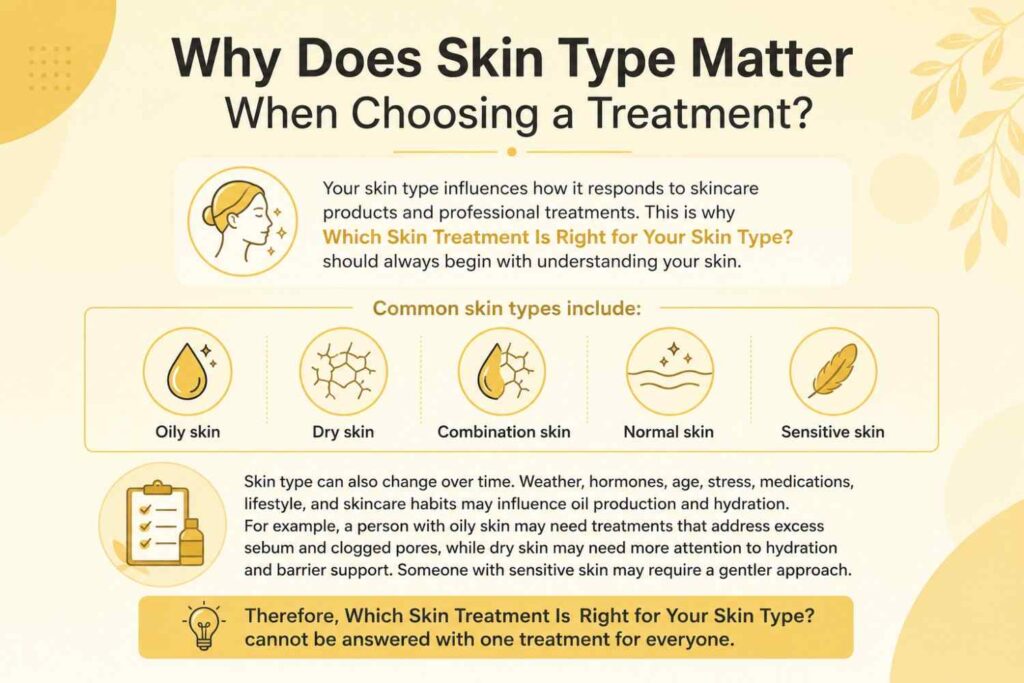
Your skin type influences how it responds to skincare products and professional treatments. This is why Which Skin Treatment Is Right for Your Skin Type? should always begin with understanding your skin.
Common skin types include:
- Oily skin
- Dry skin
- Combination skin
- Normal skin
- Sensitive skin
Skin type can also change over time. Weather, hormones, age, stress, medications, lifestyle, and skincare habits may influence oil production and hydration.For example, a person with oily skin may need treatments that address excess sebum and clogged pores, while dry skin may need more attention to hydration and barrier support. Someone with sensitive skin may require a gentler approach.Therefore, Which Skin Treatment Is Right for Your Skin Type? cannot be answered with one treatment for everyone.
How to Identify Your Skin Type
Before deciding Which Skin Treatment Is Right for Your Skin Type?, observe how your skin behaves after cleansing and throughout the day.
Oily Skin
Oily skin tends to produce more sebum. Common characteristics include:
- Noticeable shine
- Enlarged-looking pores
- Frequent blackheads or whiteheads
- Acne-prone areas
- Makeup that becomes oily quickly
For oily skin, Which Skin Treatment Is Right for Your Skin Type? may involve treatments designed to improve pore congestion and control excess oil without excessively drying the skin.
Dry Skin
Dry skin may feel tight, rough, flaky, or uncomfortable. It may also appear dull because of reduced moisture.For dry skin, Which Skin Treatment Is Right for Your Skin Type? often involves hydration-focused care and barrier-supportive approaches.
Combination Skin
Combination skin usually has both oily and dry areas. The T-zone may appear oily while the cheeks feel normal or dry.
In this situation, Which Skin Treatment Is Right for Your Skin Type? requires a balanced approach rather than treating the entire face in exactly the same way.
Normal Skin
Normal skin generally has a relatively balanced combination of oil and hydration. Even so, individual concerns such as pigmentation, dullness, fine lines, or occasional acne may still require attention.When considering Which Skin Treatment Is Right for Your Skin Type?, normal skin can often tolerate a wider range of approaches, but suitability should still be assessed individually.
Sensitive Skin
Sensitive skin may react easily to skincare products, environmental changes, fragrances, or active ingredients.For sensitive skin, Which Skin Treatment Is Right for Your Skin Type? should focus strongly on tolerance, skin-barrier protection, and gradual treatment.
What Are the Main Skin Concerns?
Knowing your skin type is only one part of understanding Which Skin Treatment Is Right for Your Skin Type? The specific concern also matters.
Common concerns include:
- Acne and clogged pores
- Acne marks
- Uneven pigmentation
- Dull skin
- Uneven texture
- Fine lines
- Sun-related skin changes
- Excessive oiliness
- Dryness
- Enlarged-looking pores
- Redness
- Skin sensitivity
Two people can have the same skin type but require completely different treatments.For example, one person with oily skin may mainly want help with acne, while another may be concerned about pigmentation. Therefore, Which Skin Treatment Is Right for Your Skin Type? depends on both skin type and treatment goals.
Which Skin Treatment Is Right for Your Skin Type? A Basic Guide
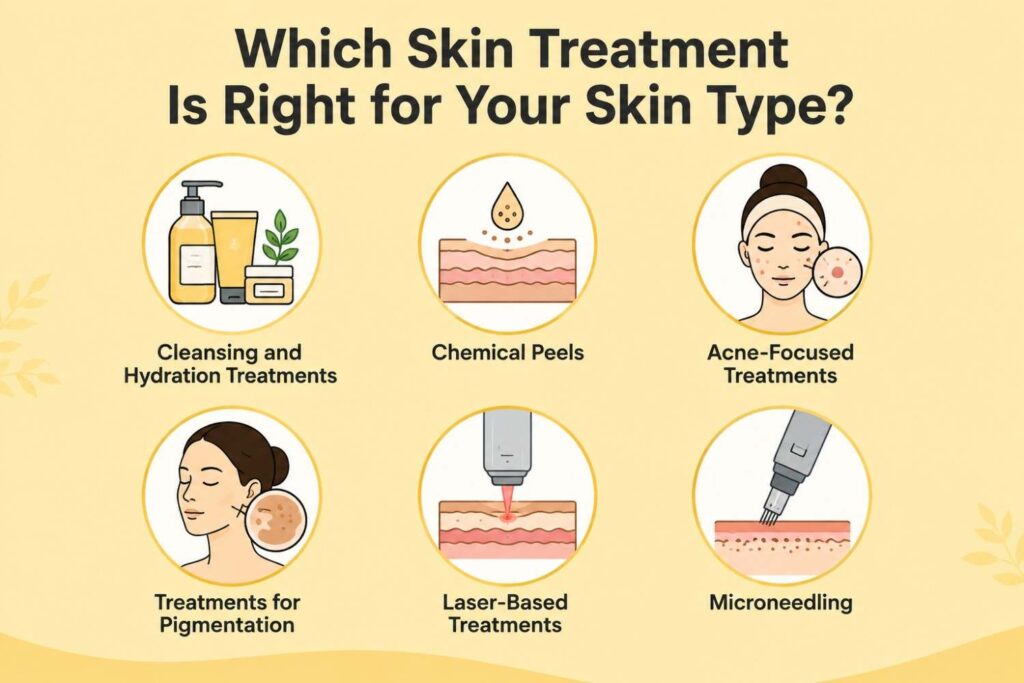
Understanding common treatment categories can make the decision easier.
- Cleansing and Hydration Treatments
Hydrating and cleansing treatments may be considered when the skin appears dull, congested, dehydrated, or uneven.For people asking Which Skin Treatment Is Right for Your Skin Type?, gentle cleansing and hydration can be useful starting points when there are no significant medical skin concerns.
These approaches may help:
- Remove surface impurities
- Support hydration
- Improve temporary skin softness
- Reduce the feeling of dryness
- Support the skin barrier
However, treatment intensity should match skin sensitivity.
- Chemical Peels
Chemical peels use specific ingredients to exfoliate the outer layers of the skin. Different formulations can be selected for different concerns.When asking Which Skin Treatment Is Right for Your Skin Type?, chemical peels may be considered for selected concerns such as:
- Uneven skin texture
- Certain pigmentation concerns
- Dull appearance
- Some forms of acne
- Surface-level skin irregularities
The appropriate peel depends on skin type, concern, concentration, application technique, and individual tolerance.
- Acne-Focused Treatments
Acne treatment is not the same for everyone. Mild congestion, inflammatory acne, and recurring acne may require different approaches.For someone asking Which Skin Treatment Is Right for Your Skin Type?, acne-focused care may include appropriate topical products, professional procedures, or medical treatment depending on the condition.Avoid selecting aggressive treatments simply because the skin is oily. Excessive drying can irritate the skin barrier and potentially make discomfort worse.
- Treatments for Pigmentation
Pigmentation can have several causes, including sun exposure, hormonal changes, inflammation, and previous skin irritation. The correct treatment therefore depends on the cause.If you are wondering Which Skin Treatment Is Right for Your Skin Type?, pigmentation should be evaluated before choosing a peel, laser-based procedure, topical treatment, or another approach.Sun protection is also an important part of pigmentation management.
- Laser-Based Treatments
Certain laser and light-based procedures may be considered for selected pigmentation, texture, vascular, acne-scar, or skin-aging concerns.However, Which Skin Treatment Is Right for Your Skin Type? cannot be determined simply by choosing the latest technology.Factors such as skin tone, sensitivity, concern, previous treatments, and the specific device being used should be considered.
- Microneedling
Microneedling uses controlled tiny punctures to stimulate a skin-healing response. It may be considered for selected concerns involving texture, acne scars, or overall skin appearance.When deciding Which Skin Treatment Is Right for Your Skin Type?, microneedling should be considered only after evaluating whether the skin is suitable for the procedure.
Which Skin Treatment Is Right for Your Skin Type? Based on Skin Type
- For Oily and Acne-Prone Skin
If you have oily skin, Which Skin Treatment Is Right for Your Skin Type? may involve gentle cleansing, selected exfoliation, acne-focused treatment, or procedures designed for specific concerns.Avoid over-exfoliating or repeatedly using harsh products. Oily skin still needs adequate hydration and barrier care.
- For Dry Skin
For dry skin, Which Skin Treatment Is Right for Your Skin Type? often points toward hydration and barrier-supportive care.Suitable approaches may include:
- Gentle cleansing
- Moisturizing treatments
- Hydrating products
- Barrier-supportive skincare
- Carefully selected procedures
Aggressive exfoliation may increase dryness and discomfort.
- For Combination Skin
If you have combination skin, Which Skin Treatment Is Right for Your Skin Type? may require a customized approach.The oily areas and dry areas may need different levels of treatment. A professional may recommend modifying the routine according to each part of the face.
- For Sensitive Skin
For sensitive skin, Which Skin Treatment Is Right for Your Skin Type? should be answered cautiously.Gentle treatments and barrier-supportive skincare may be more appropriate than aggressive exfoliation. New products or procedures may need to be introduced gradually.
- For Normal Skin
Normal skin may tolerate several treatment options, but Which Skin Treatment Is Right for Your Skin Type? still depends on the concern being addressed.There is usually no reason to use an intensive procedure simply because it is available.
Symptoms That May Mean You Need Professional Advice
Sometimes the question Which Skin Treatment Is Right for Your Skin Type? should begin with a professional skin assessment rather than immediately choosing a cosmetic procedure.Seek professional advice if you experience:
- Persistent redness
- Severe or recurring acne
- Significant itching
- Repeated rashes
- Sudden pigmentation changes
- Painful skin lesions
- Persistent swelling
- Unusual scaling or crusting
- Skin changes that do not improve
- A changing mole or skin growth
The source material emphasizes that persistent, unusual, or worsening skin changes should receive appropriate attention rather than prolonged self-treatment.
Benefits of Choosing the Right Skin Treatment
Understanding Which Skin Treatment Is Right for Your Skin Type? can provide several practical benefits.
- Better Skin Comfort
A suitable treatment is less likely to unnecessarily disturb the skin barrier when properly selected.
- More Targeted Care
Different concerns require different strategies. Matching treatment to the concern can make skincare more focused.
- Reduced Irritation
Choosing a treatment according to sensitivity and skin condition may help reduce unnecessary irritation.
- Better Long-Term Skin Management
A personalized approach can make it easier to maintain a consistent skincare routine.
- Improved Skin Appearance
Appropriate care may help improve the appearance of texture, dullness, acne, pigmentation, or dryness depending on the individual concern.The source material similarly notes that suitable treatment depends on the diagnosis, severity, symptoms, individual characteristics, and the specific condition being addressed.
What Factors Should Be Considered Before Treatment?
Before deciding Which Skin Treatment Is Right for Your Skin Type?, consider the following:
- Skin Sensitivity
Sensitive skin may need lower-intensity or carefully selected treatments.
- Current Skin Condition
Active irritation, infection, severe inflammation, or other concerns may affect treatment suitability.
- Treatment Goal
Are you trying to manage acne, pigmentation, dryness, texture, scars, or signs of skin aging? The answer can change the treatment choice.
- Previous Treatments
Previous procedures and skincare products may affect how the skin responds to a new treatment.
- Lifestyle
Sun exposure, work environment, skincare habits, and daily routines can influence treatment planning.
- Expected Recovery
Some procedures may involve redness, peeling, swelling, or temporary sensitivity. Understanding the expected recovery period helps with planning.
Common Mistakes to Avoid
When searching for Which Skin Treatment Is Right for Your Skin Type?, avoid choosing a treatment only because it is trending online.
Common mistakes include:
- Copying another person’s skincare routine
- Using multiple active ingredients at once
- Over-exfoliating
- Ignoring skin sensitivity
- Choosing a procedure without understanding its purpose
- Treating pigmentation without considering sun exposure
- Picking acne lesions
- Frequently changing products
- Using treatments without understanding the underlying concern
The source material also recommends keeping skincare simple, avoiding unnecessary irritation, protecting the skin from excessive sun exposure, and avoiding repeated treatment without understanding the cause.
Which Skin Treatment Is Right for Your Skin Type? During a Consultation
A professional skin consultation can help answer Which Skin Treatment Is Right for Your Skin Type? more accurately.
A consultation may involve discussing:
- Your main skin concern
- How long the concern has been present
- Previous treatments
- Current skincare products
- Sensitivity or irritation
- Lifestyle and environmental factors
- Desired treatment goals
A skin examination can also help assess the affected area’s appearance, texture, pigmentation, redness, inflammation, scaling, and changes over time.This assessment can help determine whether simple skincare, topical treatment, medication, a procedure, or another approach is more appropriate.
Conclusion
Which Skin Treatment Is Right for Your Skin Type? depends on much more than choosing a popular facial or advanced procedure. Your skin type, sensitivity, existing condition, specific concern, treatment goal, and previous skincare experience all influence the appropriate approach.Which Skin Treatment Is Right for Your Skin Type? should therefore be answered through a personalized assessment rather than a one-size-fits-all recommendation. Oily, dry, combination, normal, and sensitive skin can respond differently to the same treatment. Professional evaluation can help identify the underlying concern and guide a suitable plan.With the right information, consistent skincare, sun protection, and appropriate professional guidance, you can make more informed decisions about your skin. If you are considering Which Skin Treatment Is Right for Your Skin Type? in Thrissur, a personalized skin assessment can be a useful first step toward choosing care that matches your individual needs. You can learn more about maintaining healthy skin and recognizing common skin conditions from the American Academy of Dermatology (AAD) .
FREQUENTLY ASKED QUESTIONS

Dr. Arathy Jerald
Dermatologist & Cosmetologist
Dr. Arathy Jerald is an experienced dermatologist and cosmetologist known for providing personalized skin and hair treatments. She focuses on combining medical dermatology with advanced aesthetic procedures to help patients achieve healthy and radiant skin.
Her approach emphasizes understanding each patient's unique concerns and creating customized treatment plans that enhance both skin health and natural beauty.
Revive Skin & Cosmetology Clinic, Palakkad, Kerala

