
7 Powerful Reasons: When Should You Visit a Skin Clinic Soon
Knowing when should you visit a skin clinic can help you address skin concerns before they become more difficult to manage. While occasional pimples, dryness, or minor irritation may improve with basic skincare, persistent or unusual changes may require professional evaluation. If you are looking for appropriate skin care in Thrissur, understanding when professional attention is necessary can help you make an informed decision.
The skin can sometimes reflect changes occurring within the body. New rashes, persistent itching, unusual growths, recurring acne, pigmentation changes, or wounds that do not heal normally may need assessment. A skin clinic can evaluate these concerns, identify possible causes, and recommend suitable treatment based on your individual condition.
This guide explains when should you visit a skin clinic, the warning signs to watch for, common reasons people seek dermatological care, available treatment approaches, and practical tips for maintaining healthier skin.
When Should You Visit a Skin Clinic
One of the most common questions people have is when should you visit a skin clinic instead of continuing with home skincare. A professional consultation may be appropriate when a skin problem:
- Persists for several weeks
- Keeps returning despite basic care
- Causes significant itching, burning, or pain
- Spreads to other areas of the body
- Changes in appearance, size, or colour
- Affects your confidence or daily activities
- Does not respond to commonly used skincare products
- Appears suddenly without an obvious cause
Not every skin concern requires immediate medical attention. However, persistent or worsening symptoms should not be ignored.
Early assessment can sometimes make treatment simpler by identifying the problem before it becomes more extensive.
Persistent Acne May Need Professional Evaluation
Acne is common among teenagers and adults, but persistent or severe acne may require professional care. Occasional breakouts can often be managed with an appropriate skincare routine, while repeated inflammatory acne may need a more structured treatment plan.
You may consider visiting a skin clinic if you experience:
- Frequent inflammatory pimples
- Painful or deep acne lesions
- Acne that leaves dark marks
- Acne scars or changes in skin texture
- Breakouts that continue despite regular skincare
- Sudden adult-onset acne
- Acne affecting your emotional confidence
Professional assessment can help determine whether acne is associated with excess oil production, clogged pores, hormonal influences, medication, skincare products, or other factors.
Treatment may involve topical medications, oral medicines when appropriate, chemical peels, acne procedures, or other dermatologist-guided approaches.
Avoid repeatedly squeezing or picking pimples, as this can increase inflammation and contribute to scarring.
Persistent Rashes and Skin Irritation
A rash can develop for many reasons. Contact with an irritating substance, allergic reactions, infections, eczema, psoriasis, and other skin conditions can produce redness, scaling, bumps, or itching.
If a rash continues for an extended period, frequently returns, spreads, or becomes increasingly uncomfortable, professional evaluation may be useful.
A skin clinic can assess characteristics such as:
- Location of the rash
- Shape and pattern
- Colour changes
- Presence of scaling or blisters
- Associated itching or pain
- Duration and progression
- Possible exposure to irritants or allergens
Avoid applying multiple medicated creams without knowing the cause. Some products may temporarily reduce symptoms while allowing an underlying condition to continue.
Unusual Moles, Growths, or Skin Changes
Changes in moles or the appearance of new growths deserve attention, particularly when they look different from other marks on the skin.
You should consider professional evaluation if a mole or skin growth:
- Changes in size
- Develops an irregular shape
- Changes colour
- Develops uneven colouring
- Bleeds without an obvious injury
- Crusts repeatedly
- Becomes persistently painful or itchy
- Changes noticeably over time
Most skin growths are not dangerous, but changes should be assessed rather than diagnosed based only on appearance.
A skin specialist can examine the lesion and determine whether monitoring, further testing, or treatment is appropriate.
Excessive Hair Loss Can Require Assessment
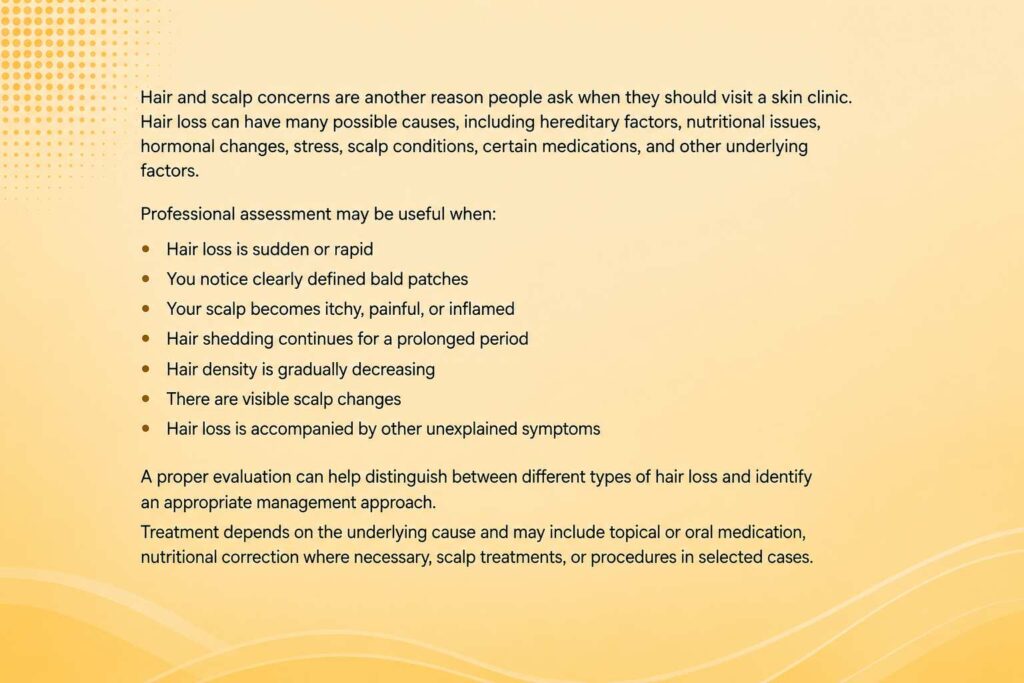
Hair and scalp concerns are another reason people ask when should you visit a skin clinic. Hair loss can have many possible causes, including hereditary factors, nutritional issues, hormonal changes, stress, scalp conditions, certain medications, and other underlying factors.
Professional assessment may be useful when:
- Hair loss is sudden or rapid
- You notice clearly defined bald patches
- Your scalp becomes itchy, painful, or inflamed
- Hair shedding continues for a prolonged period
- Hair density is gradually decreasing
- There are visible scalp changes
- Hair loss is accompanied by other unexplained symptoms
A proper evaluation can help distinguish between different types of hair loss and identify an appropriate management approach.
Treatment depends on the underlying cause and may include topical or oral medication, nutritional correction where necessary, scalp treatments, or procedures in selected cases.
Persistent Pigmentation or Uneven Skin Tone
Changes in skin colour are common and can develop after acne, sun exposure, hormonal changes, inflammation, or certain skin conditions.
Although mild pigmentation may not require medical treatment, persistent or worsening pigmentation can be evaluated at a skin clinic.
Common concerns include:
- Dark spots
- Uneven skin tone
- Melasma
- Post-inflammatory pigmentation
- Sun-related pigmentation
- Localised patches of darker skin
The correct treatment depends on the cause, skin type, duration, and severity of pigmentation.
Possible approaches may include prescription skincare, chemical peels, laser-based procedures, or other dermatologist-guided treatments.
Daily sun protection is particularly important because ultraviolet exposure can worsen several forms of pigmentation.
Chronic Itching, Dryness, or Scaling
Dry skin is often manageable with moisturisers and gentle skincare. However, persistent itching or scaling may indicate an underlying skin condition.
Conditions such as eczema, psoriasis, fungal infections, and other inflammatory disorders can cause prolonged discomfort.
You may need professional evaluation if:
- Itching interferes with sleep
- Dryness persists despite moisturising
- Skin repeatedly cracks or bleeds
- Scaling continues for weeks
- Symptoms spread to other areas
- The skin becomes thickened or inflamed
- Symptoms repeatedly return
Identifying the underlying cause is important because different conditions require different treatments. Using the wrong cream may not address the actual problem.
Skin Infections Should Be Evaluated Appropriately
Skin infections may be caused by bacteria, fungi, viruses, or parasites. Symptoms can vary depending on the type of infection.
Possible warning signs include:
- Increasing redness
- Swelling
- Warmth around an affected area
- Pus or discharge
- Pain or tenderness
- Spreading rash
- Persistent fungal patches
- Recurrent infections
Some infections can spread to other parts of the body or to other people. Professional assessment can help determine the likely cause and appropriate treatment.
Do not share personal towels, razors, cosmetics, or other items when an infectious skin condition is suspected.
Wounds That Do Not Heal Normally
Minor cuts and abrasions generally improve with basic wound care. A wound that remains open, repeatedly bleeds, becomes increasingly painful, or shows signs of infection should receive appropriate medical attention.
Professional evaluation is particularly important when a wound:
- Does not appear to be healing
- Keeps reopening
- Develops increasing redness or swelling
- Produces unusual discharge
- Becomes increasingly painful
- Develops persistent crusting or bleeding
- Appears without a clear injury
Delayed healing can have different causes, so persistent wounds should not simply be covered and ignored.
What Happens During a Skin Clinic Consultation
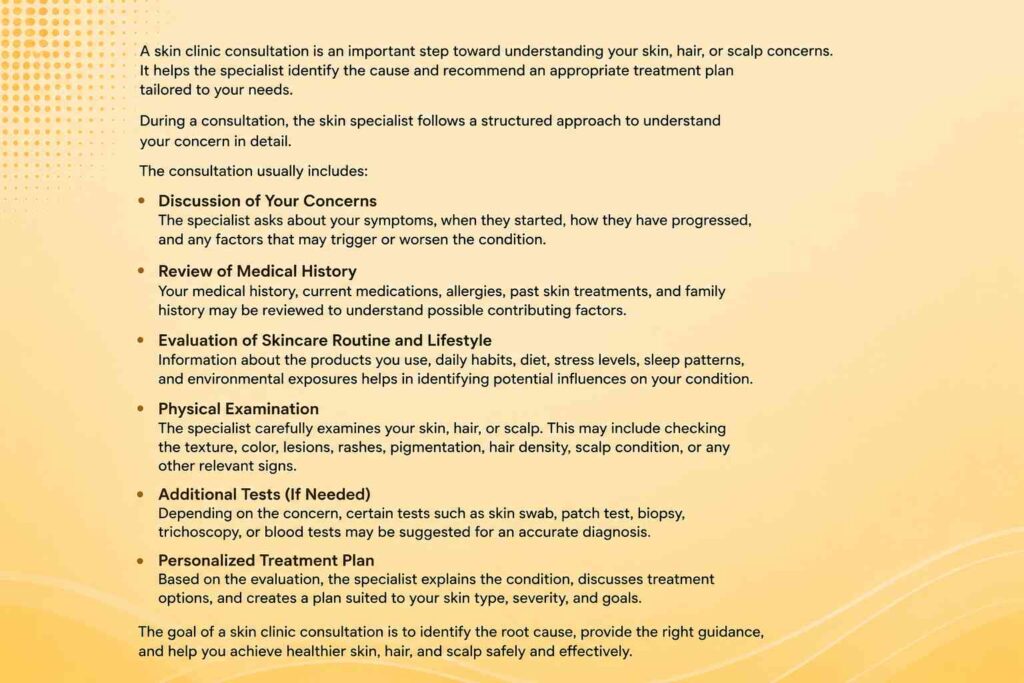
Understanding what happens during a consultation can make the process less stressful.
A skin specialist generally begins by discussing your symptoms, medical history, skincare routine, medications, allergies, lifestyle factors, and how long the problem has been present.
The skin may then be examined carefully to assess:
- Colour and texture
- Lesion pattern
- Inflammation
- Scaling
- Pigmentation
- Hair or scalp changes
- Signs of infection
- Changes in moles or growths
Depending on the concern, additional investigations may sometimes be recommended.
The objective is to identify the likely cause and develop an appropriate management plan rather than simply treating visible symptoms.
Common Skin Treatments
The appropriate treatment depends on the diagnosis and severity of the condition. There is no single treatment that works for every skin concern.
Common approaches may include:
- Prescription topical medications
- Oral medications when indicated
- Medicated cleansers
- Moisturisers and barrier-supporting products
- Chemical peels
- Laser-based treatments
- Light-based procedures
- Acne procedures
- Scar treatments
- Hair and scalp treatments
- Management of skin infections
Cosmetic procedures should also be selected according to the individual’s skin type and specific concern.
A professional evaluation can help determine whether a procedure is appropriate and what results can reasonably be expected.
Benefits of Visiting a Skin Clinic Early
Understanding when should you visit a skin clinic is important because early assessment can provide several advantages.
Earlier Identification of Skin Conditions
Persistent symptoms can sometimes be linked to conditions that require specific treatment. Professional assessment helps identify these concerns more accurately.
Personalised Treatment
Skin type, age, symptoms, medical history, and previous treatments can all influence treatment decisions.
Reduced Risk of Complications
Appropriate management may help reduce problems such as persistent inflammation, infection, scarring, or worsening pigmentation.
Better Skincare Guidance
A skin specialist can help identify products or ingredients that may be appropriate for your skin and advise you on what to avoid.
Improved Long-Term Skin Management
Regular attention to recurring concerns can help you understand triggers and develop a more consistent skincare routine.
How to Prepare for a Skin Clinic Visit
A little preparation can make your consultation more useful.
Before visiting a skin clinic, consider making a note of:
- When your symptoms first appeared
- Whether they are getting better or worse
- Products currently used on your skin
- Previous treatments
- Medications and supplements
- Known allergies
- Possible triggers
- Any recent changes in your routine
If a skin concern changes over time, photographs taken at different stages may also help demonstrate its progression.
Avoid applying unfamiliar products immediately before the consultation unless specifically advised otherwise.
Tips for Maintaining Healthy Skin
Professional treatment is only one part of good skin health. Everyday habits can also support the skin barrier.
Helpful practices include:
- Cleanse gently rather than scrubbing aggressively
- Use moisturiser appropriate for your skin type
- Apply broad-spectrum sunscreen regularly
- Avoid picking acne or skin lesions
- Do not share personal skincare or grooming items
- Keep makeup tools clean
- Avoid unnecessary use of medicated creams
- Maintain adequate hydration and balanced nutrition
- Follow prescribed treatments consistently
- Seek professional advice for persistent changes
A simple and consistent skincare routine is generally more useful than repeatedly switching between products.
When Should You Visit a Skin Clinic Immediately
Some symptoms require more prompt attention than routine cosmetic concerns.
Seek appropriate medical evaluation when you notice a rapidly spreading rash, severe swelling, significant pain, extensive blistering, signs of serious infection, or a rapidly changing skin growth.
Similarly, sudden extensive hair loss or a rapidly changing lesion should not be ignored.
If symptoms are severe or accompanied by other concerning systemic symptoms, seek appropriate medical care promptly rather than relying solely on home skincare.
Conclusion
Knowing when should you visit a skin clinic can help you take action when a skin, hair, or scalp concern does not behave like a temporary problem. Persistent acne, unusual moles, recurring rashes, chronic itching, pigmentation, hair loss, infections, and non-healing wounds may all benefit from professional assessment.
The goal of a skin clinic visit is not only to improve appearance but also to understand the underlying cause of a concern and choose an appropriate management approach. Avoid unnecessary self-treatment, especially when symptoms are persistent or worsening.
If you are considering professional skin care in Thrissur, paying attention to changes in your skin and seeking timely evaluation can support healthier, better-managed skin over the long term. According to the American Academy of Dermatology, persistent or worsening skin problems should be evaluated by a qualified dermatologist for appropriate diagnosis and treatment.
Frequently Asked Questions

Dr. Arathy Jerald
Dermatologist & Cosmetologist
Dr. Arathy Jerald is an experienced dermatologist and cosmetologist known for providing personalized skin and hair treatments. She focuses on combining medical dermatology with advanced aesthetic procedures to help patients achieve healthy and radiant skin.
Her approach emphasizes understanding each patient's unique concerns and creating customized treatment plans that enhance both skin health and natural beauty.
Revive Skin & Cosmetology Clinic, Palakkad, Kerala

