
Pigmentation Treatment in Palakkad: A Complete Guide to Clearer Skin
Uneven skin tone, dark patches, acne marks, tanning, and brown spots are common skin concerns that can affect confidence. Many people search for pigmentation treatment in Palakkad when home remedies or over-the-counter creams do not give proper results. Pigmentation may look like a cosmetic concern, but it often needs careful diagnosis because the cause can vary from sun exposure to hormones, acne, inflammation, or skin irritation.
The right treatment starts with understanding the type of pigmentation. A dermatologist can examine the skin, identify the reason behind the discoloration, and suggest a safe treatment plan suitable for your skin type.
What Is Skin Pigmentation?
Skin pigmentation refers to the natural color of your skin. This color is mainly controlled by melanin, a pigment produced by skin cells. When melanin production increases in certain areas, dark spots or patches can appear.
This condition is called hyperpigmentation. It may appear on the face, neck, hands, arms, back, or other areas exposed to sunlight. Sun exposure is one of the most common triggers for excess melanin production, and other causes include inflammation, acne, hormonal changes, age, genetics, and skin injury.
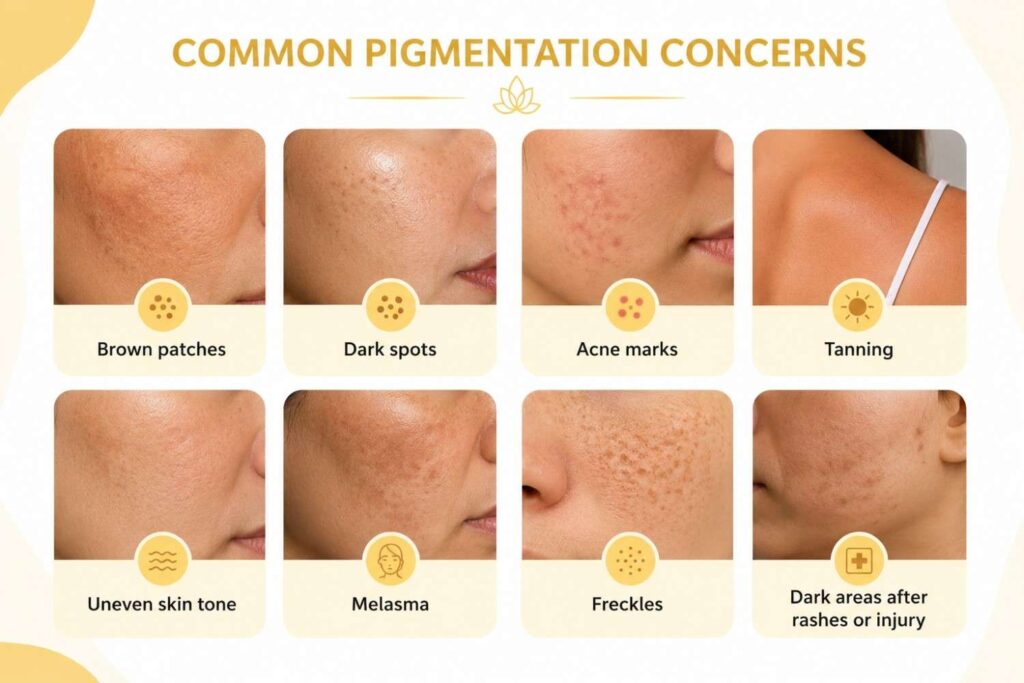
People may notice pigmentation as:
- Brown patches
- Dark spots
- Acne marks
- Tanning
- Uneven skin tone
- Melasma
- Freckles
- Dark areas after rashes or injury
A professional consultation for pigmentation treatment in Palakkad helps identify which type of pigmentation is present and how deeply it affects the skin.
Why Does Pigmentation Happen?
Pigmentation can happen for many reasons. Sometimes it is temporary, and sometimes it becomes stubborn without proper care.
1. Sun Exposure
Sunlight stimulates melanin production. This is the skin’s natural defense against ultraviolet rays, but repeated exposure can cause tanning, dark spots, and patchy pigmentation. Daily sun protection is one of the most important steps in preventing and managing pigmentation.
2. Acne Marks
After acne heals, it can leave brown or dark marks. This is known as post-inflammatory hyperpigmentation. It is common in acne-prone skin and can become darker with sun exposure. DermNet notes that post-inflammatory hyperpigmentation may appear as light brown to black patches after skin inflammation or injury.
3. Hormonal Changes
Hormonal changes can trigger melasma, especially in women. It may appear during pregnancy, after hormonal medicine use, or due to other hormonal influences.
4. Skin Inflammation
Rashes, eczema, burns, allergies, injuries, and infections can leave dark marks after healing. This is more common when the skin is scratched, irritated, or exposed to sun during recovery.
5. Wrong Skincare Products
Harsh scrubs, steroid creams, bleaching products, or strong active ingredients used without guidance can irritate the skin and worsen pigmentation.
Common Types of Pigmentation
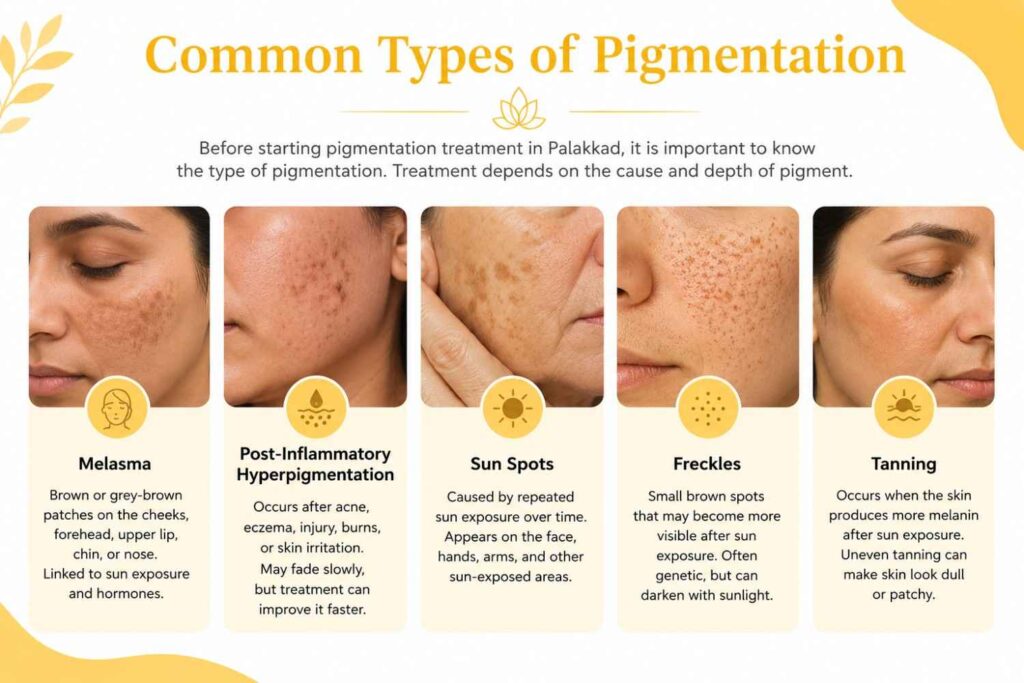
Before starting pigmentation treatment in Palakkad, it is important to know the type of pigmentation. Treatment depends on the cause and depth of pigment.
Melasma
Melasma usually appears as brown or grey-brown patches on the cheeks, forehead, upper lip, chin, or nose. It is commonly linked to sun exposure and hormones. The American Academy of Dermatology explains that melasma treatment usually begins with sun protection and creams, and a dermatologist can create an individualized treatment plan.
Post-Inflammatory Hyperpigmentation
This happens after acne, eczema, injury, burns, or skin irritation. It may fade slowly, but treatment can help improve the appearance faster.
Sun Spots
Sun spots are usually caused by repeated sun exposure over time. They may appear on the face, hands, arms, and other sun-exposed areas.
Freckles
Freckles are small brown spots that may become more visible after sun exposure. They are often genetic but can darken with sunlight.
Tanning
Tanning occurs when the skin produces more melanin after sun exposure. Uneven tanning can make the skin look dull or patchy.
Symptoms That Show You May Need Pigmentation Treatment
You may consider pigmentation treatment in Palakkad if you notice:
- Dark patches on the face
- Acne marks that do not fade
- Brown spots after sun exposure
- Uneven skin tone
- Pigmentation around the mouth
- Dark areas after rashes or allergy
- Melasma-like patches on cheeks or forehead
- Skin darkening after using certain products
- Pigmentation that keeps spreading
- Dullness with patchy discoloration
If the patches are changing quickly, spreading, itching, bleeding, or appearing with other symptoms, it is better to consult a dermatologist.
Pigmentation Treatment in Palakkad: Available Options
The best pigmentation treatment in Palakkad depends on the type of pigmentation, skin sensitivity, depth of pigment, and patient goals. A dermatologist may suggest one or more of the following options.
1. Sunscreen and Sun Protection
Sun protection is the foundation of pigmentation care. Without sunscreen, dark spots may return or become worse even after treatment.
Dermatologists commonly recommend broad-spectrum sunscreen with SPF 30 or higher, along with sun-protective habits such as hats, shade, and avoiding peak sunlight. The American Academy of Dermatology states that dermatologists recommend broad-spectrum, water-resistant sunscreen with SPF 30 or higher.
2. Topical Creams
Dermatologist-recommended creams may help reduce melanin production and improve skin tone. These may include ingredients such as:
- Azelaic acid
- Kojic acid
- Vitamin C
- Niacinamide
- Retinoids
- Hydroquinone, when suitable
- Arbutin
- Tranexamic acid
- Cysteamine
DermNet lists several topical options for post-inflammatory hyperpigmentation, including hydroquinone, azelaic acid, vitamin C, tretinoin, glycolic acid peels, kojic acid, arbutin, licorice extracts, niacinamide, and related ingredients.
3. Chemical Peels
Chemical peels help remove damaged outer skin layers and improve tone, texture, acne marks, and mild pigmentation. Common peel ingredients may include glycolic acid, salicylic acid, lactic acid, mandelic acid, or other dermatologist-selected solutions.
Peels should be chosen carefully based on skin type. Using the wrong strength or doing peels without proper guidance can cause irritation or more pigmentation.
4. Laser Treatment
Laser treatment may be advised for selected pigmentation concerns. It can target excess pigment and improve skin tone. However, lasers must be used carefully, especially in melasma-prone or sensitive skin, because inappropriate treatment may worsen pigmentation.
DermNet notes that chemical peels and lasers may be used with caution for melasma, but they carry a risk of worsening melasma or causing post-inflammatory hyperpigmentation.
5. Carbon Laser Peel
Carbon laser peel may help with dullness, oily skin, open pores, mild pigmentation, and overall skin freshness. It is often used as a skin rejuvenation option, depending on the patient’s skin condition.
6. Microneedling
Microneedling may be used in selected cases of acne marks, uneven texture, and pigmentation-related concerns. It helps stimulate skin repair but should be done carefully and only when suitable.
7. Combination Treatment
Many pigmentation concerns need a combination plan. For example, melasma may need sunscreen, topical creams, lifestyle changes, and careful procedures. Acne marks may need acne control first, followed by peels or other treatments.
A customized plan for pigmentation treatment in Palakkad may include:
- Diagnosis
- Sunscreen routine
- Home skincare plan
- Medical creams
- Procedure sessions
- Follow-up
- Maintenance care
Why Pigmentation Treatment Needs Patience
Pigmentation does not usually disappear overnight. Some marks fade in weeks, while deeper pigmentation may take months. Melasma can improve, but it may also return if sun protection and maintenance are not followed.
Treatment progress depends on:
- Skin type
- Pigment depth
- Cause of pigmentation
- Sun exposure
- Hormonal triggers
- Consistency with creams
- Number of procedure sessions
- Follow-up care
A dermatologist can set realistic expectations and adjust treatment based on skin response.
Mistakes That Can Worsen Pigmentation
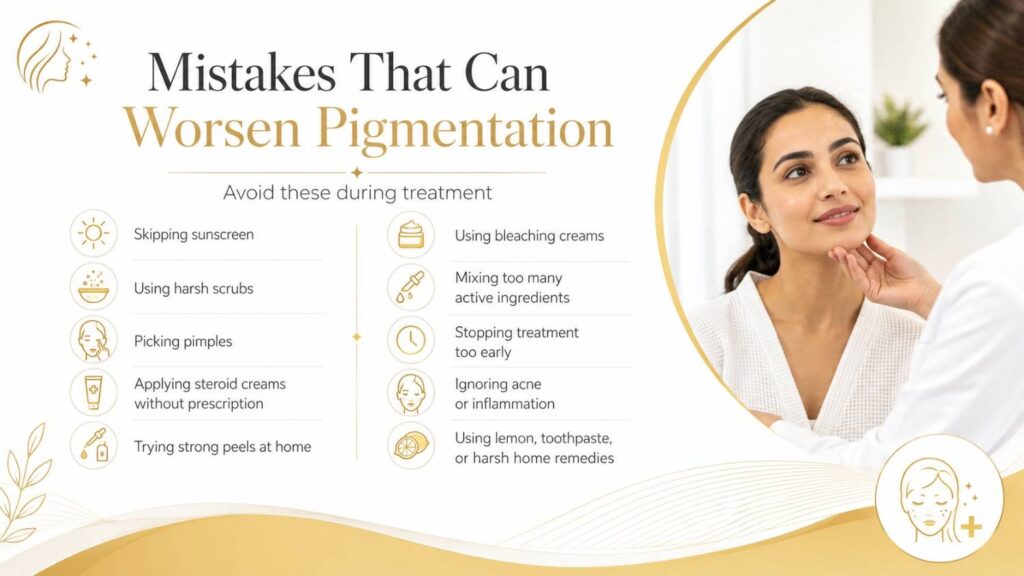
Avoid these common mistakes during pigmentation treatment in Palakkad:
- Skipping sunscreen
- Using harsh scrubs
- Picking pimples
- Applying steroid creams without prescription
- Trying strong peels at home
- Using bleaching creams
- Mixing too many active ingredients
- Stopping treatment too early
- Ignoring acne or inflammation
- Using lemon, toothpaste, or harsh home remedies
The skin barrier should be protected during pigmentation care. Irritation can make dark spots worse.
Who Can Benefit from Pigmentation Treatment?
You may benefit from pigmentation treatment in Palakkad if you have:
- Melasma
- Acne marks
- Sun spots
- Uneven skin tone
- Tanning
- Dark patches around the mouth
- Pigmentation after rashes
- Dull and patchy skin
- Pigmentation after cosmetic product irritation
- Post-inflammatory marks
The earlier the cause is identified, the better the chance of controlling pigmentation.
Why Choose a Dermatologist for Pigmentation Care?
Pigmentation can be stubborn and sensitive. A dermatologist can check whether the concern is superficial or deep, active or stable, sun-related or hormone-related, acne-related or product-induced.
A dermatologist-led plan is helpful because it offers:
- Correct diagnosis
- Safe product selection
- Suitable peel or laser planning
- Skin type-based treatment
- Prevention of irritation
- Follow-up and maintenance
- Better long-term control
Choosing professional pigmentation treatment in Palakkad can help reduce trial-and-error skincare and avoid treatments that may harm the skin.
Conclusion
Pigmentation treatment in Palakkad should begin with proper diagnosis, not random creams or harsh home remedies. Dark spots, melasma, acne marks, tanning, and uneven skin tone can have different causes, so treatment must be planned according to skin type and pigmentation depth.
With dermatologist guidance, sun protection, suitable creams, peels, lasers, and maintenance care, pigmentation can be managed more safely and effectively. If you are dealing with stubborn dark patches or uneven skin tone, professional pigmentation treatment in Palakkad can help you move toward clearer, healthier-looking skin.
To learn more about your suitability for Microneedling Treatment and explore personalized treatment options, visit American Academy of Dermatology
FREQUENTLY ASKED QUESTIONS

Dr. Arathy Jerald
Dermatologist & Cosmetologist
Dr. Arathy Jerald is an experienced dermatologist and cosmetologist known for providing personalized skin and hair treatments. She focuses on combining medical dermatology with advanced aesthetic procedures to help patients achieve healthy and radiant skin.
Her approach emphasizes understanding each patient's unique concerns and creating customized treatment plans that enhance both skin health and natural beauty.
Revive Skin & Cosmetology Clinic, Palakkad, Kerala

