
Common Skin Problems Treated by Dermatologists
Skin problems can affect people of all ages and may appear as acne, rashes, itching, dryness, pigmentation, infections, or changes in skin texture. While some concerns may improve with simple skin care, persistent or recurring symptoms may require professional evaluation. Understanding the Common Skin Problems Treated by Dermatologists can help you recognize when expert skin care may be appropriate. For people seeking professional skin care in Palakkad, knowing the common conditions dermatologists manage can also make it easier to understand available treatment approaches.The skin is continuously exposed to sunlight, pollution, weather changes, allergens, microorganisms, and different products. Hormonal changes, genetics, lifestyle factors, and underlying health conditions can also influence skin health.A dermatologist can assess the appearance and history of a skin concern, identify possible causes, and recommend a suitable management plan based on the individual’s condition.
Common Skin Problems Treated by Dermatologists
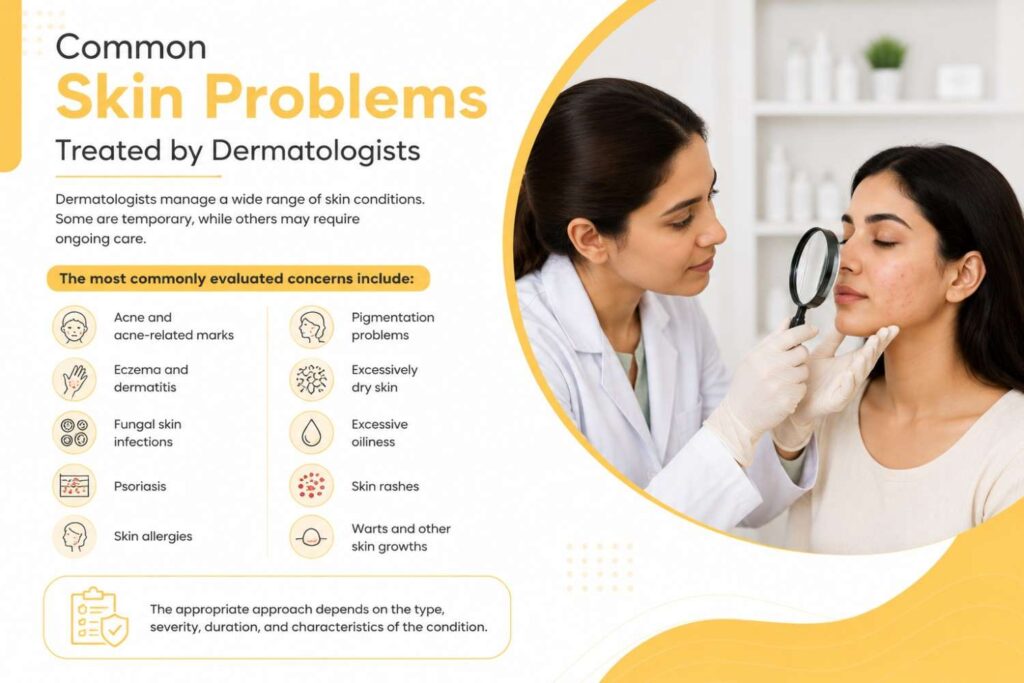
Dermatologists manage a wide range of skin conditions. Some are temporary, while others may require ongoing care.
The most commonly evaluated concerns include:
- Acne and acne-related marks
- Eczema and dermatitis
- Fungal skin infections
- Psoriasis
- Skin allergies
- Pigmentation problems
- Excessively dry skin
- Excessive oiliness
- Skin rashes
- Warts and other skin growths
The appropriate approach depends on the type, severity, duration, and characteristics of the condition.
1. Acne
Acne is one of the most frequently encountered skin concerns. It develops when hair follicles become blocked with oil and dead skin cells and may appear as blackheads, whiteheads, pimples, or inflammatory lesions.
Common Causes of Acne
Several factors can contribute to acne, including:
- Excess oil production
- Blocked pores
- Hormonal changes
- Certain skin care products
- Genetic factors
- Inflammation
- Lifestyle influences
Acne can vary considerably from person to person. Some people experience occasional breakouts, while others develop persistent or recurring acne.
Symptoms of Acne
Common signs include:
- Blackheads
- Whiteheads
- Pimples
- Red or inflamed bumps
- Deeper inflammatory lesions
- Post-acne marks
Persistent inflammatory acne may increase the possibility of long-lasting marks or certain types of scarring. Professional evaluation can help determine an appropriate treatment approach.
2. Eczema and Dermatitis
Eczema and dermatitis are inflammatory skin conditions that can cause dryness, itching, redness, scaling, and irritation.These conditions can have different triggers. Irritating products, allergens, environmental factors, dry weather, and individual skin sensitivity may contribute to symptoms.
Common Symptoms
People may experience:
- Dry or rough skin
- Redness
- Itching
- Scaling
- Irritation
- Skin sensitivity
Repeated scratching can further damage the skin surface and increase irritation. A dermatologist can help identify possible triggers and recommend suitable skin care or treatment.
3. Fungal Skin Infections
Fungal infections are another important category among the Common Skin Problems Treated by Dermatologists.These infections may affect different areas of the skin and can produce itching, redness, scaling, or patches.
Possible Causes
Fungal skin infections can develop when fungi multiply on the skin under suitable conditions. Warmth, moisture, and certain environmental factors may contribute to their development.
Common Symptoms
Symptoms may include:
- Itching
- Redness
- Scaling
- Patches on the skin
- Changes in skin texture
The appearance of a fungal infection can sometimes resemble other skin conditions. Proper evaluation can help determine whether antifungal treatment is appropriate.
4. Psoriasis
Psoriasis is a chronic inflammatory skin condition that can cause areas of thickened, inflamed, or scaly skin.The condition can vary in severity and may have periods when symptoms become more noticeable.
Factors Associated With Psoriasis
Several factors may influence psoriasis symptoms, including:
- Genetic factors
- Immune system activity
- Environmental influences
- Stress
- Certain triggers
Treatment is generally focused on controlling symptoms and managing the condition over time. The appropriate approach depends on the individual and the extent of the condition.
5. Skin Allergies
Skin allergies can develop when the skin reacts to a particular substance or allergen.Possible triggers may include certain cosmetics, fragrances, medications, plants, metals, or other substances.
Symptoms of Skin Allergies
A person may experience:
- Redness
- Itching
- Rash
- Swelling
- Irritation
- Dryness
Identifying and avoiding the trigger can be an important part of managing recurring allergic reactions.If a reaction continues or repeatedly returns, professional assessment can help identify possible causes and guide suitable treatment.
6. Pigmentation Problems
Changes in skin pigmentation are another common reason people seek dermatological advice.Pigmentation concerns may appear as darker or lighter areas of skin and can develop due to several factors.
Common Causes of Pigmentation
Possible contributors include:
- Sun exposure
- Hormonal changes
- Inflammation
- Previous skin irritation
- Certain medications
- Individual skin characteristics
Not every pigmentation concern requires treatment. A dermatologist can assess the appearance and possible cause before suggesting an appropriate approach.
7. Excessively Dry Skin
Dry skin occurs when the skin does not retain enough moisture. It may feel rough, tight, flaky, or uncomfortable.Environmental conditions, frequent washing, harsh cleansers, low humidity, and certain skin conditions can contribute to dryness.
Symptoms of Dry Skin
Common symptoms include:
- Flaking
- Rough texture
- Tightness
- Itching
- Fine scaling
- Increased sensitivity
Simple changes such as using a suitable moisturizer and avoiding harsh cleansing products may help some people. Persistent dryness, however, may be associated with an underlying skin condition and can benefit from professional evaluation.
8. Skin Rashes
A skin rash is a visible change in the appearance or texture of the skin. Rashes can have many different causes, which makes identifying the underlying problem important.
Possible causes include:
- Allergic reactions
- Irritation
- Infections
- Inflammatory conditions
- Environmental exposure
- Certain medications
When Should a Rash Be Evaluated?
Consider professional evaluation when a rash:
- Persists for an extended period
- Repeatedly returns
- Spreads to other areas
- Becomes increasingly uncomfortable
- Does not improve with basic skin care
- Is accompanied by other unusual changes
A dermatologist can examine the affected skin and consider the history of the rash before recommending treatment.
9. Warts and Other Skin Growths
Warts and other skin growths may also be evaluated by dermatologists.Warts are associated with certain types of viral infections and can appear as small raised growths on the skin. Other skin growths may have different causes.Changes in the size, shape, color, or appearance of a skin growth should be appropriately assessed.Not every growth requires treatment. Depending on the type and characteristics, a dermatologist may recommend observation, medication, or a suitable procedure.
10. Hair and Scalp-Related Skin Concerns
Dermatologists also evaluate concerns involving the scalp and hair because these areas are closely connected with skin health.
Common concerns may include:
- Dandruff
- Scalp irritation
- Excessive scalp oiliness
- Certain inflammatory scalp conditions
- Hair thinning
- Hair loss
The causes can vary considerably. Genetics, hormonal factors, nutritional factors, scalp conditions, medications, and other influences may contribute to hair or scalp changes.A professional assessment can help determine whether the problem is related to the scalp, hair follicles, or another underlying factor.
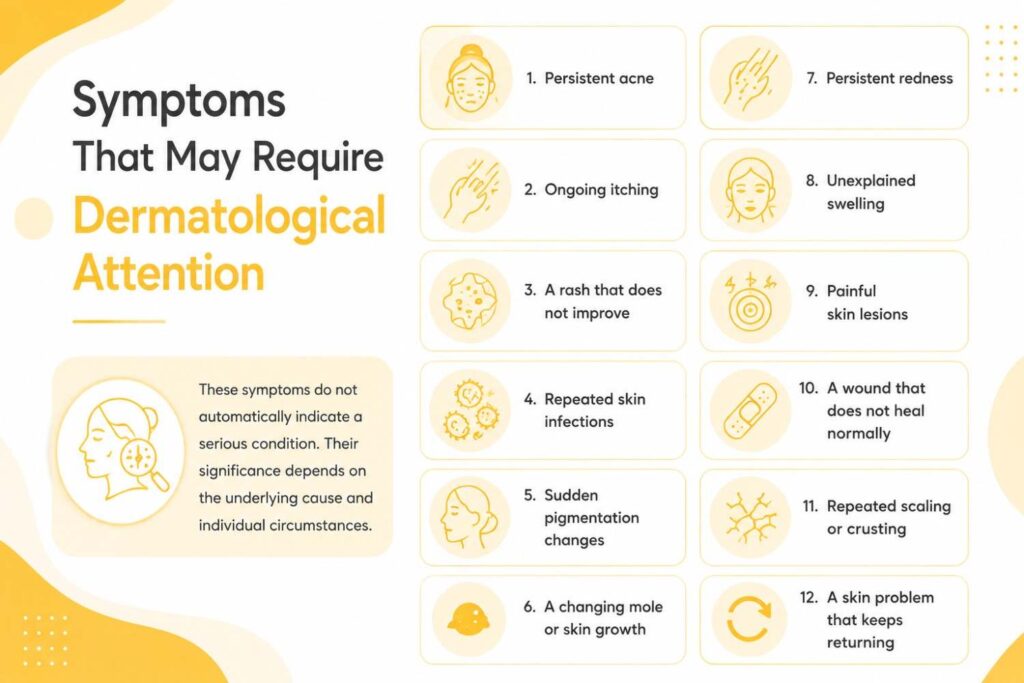
Symptoms That May Require Dermatological Attention
Not every skin change requires a dermatologist. However, certain symptoms should not be ignored when they persist or repeatedly return.
Consider professional evaluation if you experience:
- Persistent acne
- Ongoing itching
- A rash that does not improve
- Repeated skin infections
- Sudden pigmentation changes
- A changing mole or skin growth
- Persistent redness
- Unexplained swelling
- Painful skin lesions
- A wound that does not heal normally
- Repeated scaling or crusting
- A skin problem that keeps returning
These symptoms do not automatically indicate a serious condition. Their significance depends on the underlying cause and individual circumstances.
How Dermatologists Diagnose Skin Problems
Understanding how dermatologists evaluate the Common Skin Problems Treated by Dermatologists can make a consultation easier to understand.The process generally begins with a discussion about the skin concern.
A dermatologist may ask about:
- When the symptoms started
- Whether the problem is recurring
- Possible triggers
- Previous treatments
- Current skin care products
- Changes in appearance
- Associated symptoms
- Relevant medical or family history
The skin may then be examined to assess its appearance, texture, color, pattern, and other characteristics.In certain situations, additional tests may be recommended to help clarify the diagnosis.The exact evaluation depends on the suspected condition.
Benefits of Professional Skin Care
There are several potential benefits to consulting a dermatologist for persistent or recurring concerns.
- Identifying the Underlying Cause
Similar symptoms can result from different conditions. Professional evaluation can help distinguish between possible causes.
- Selecting Suitable Treatment
A dermatologist can consider the individual’s skin characteristics and recommend an appropriate treatment approach.
- Managing Recurring Conditions
Some skin problems require ongoing management. Professional guidance can help people understand triggers and maintain a consistent care routine.
- Supporting Skin Health
Appropriate treatment can help manage inflammation, dryness, irritation, acne, pigmentation, and other concerns.
- Avoiding Unnecessary Product Use
Trying multiple products without knowing the cause of a skin problem can sometimes increase irritation. Professional advice may help simplify the approach.
- Practical Skin Care Tips
Professional treatment works best when supported by suitable daily habits.
- Use Gentle Cleansing
Choose a cleanser appropriate for your skin type and avoid excessive washing.
- Moisturize Regularly
Moisturizers can help support the skin barrier and reduce dryness.
Conclusion
Understanding the Common Skin Problems Treated by Dermatologists can help you recognize when a skin concern may need professional attention. Learning about the Common Skin Problems Treated by Dermatologists is also useful for understanding why different skin conditions require different approaches. Acne, eczema, dermatitis, fungal infections, psoriasis, allergies, pigmentation concerns, dry skin, rashes, skin growths, and scalp-related problems can have different causes and may require different approaches.
The right treatment depends on the condition, its severity, symptoms, and individual skin characteristics. Instead of repeatedly trying different products or home remedies, persistent or recurring concerns can be evaluated by a qualified dermatologist. Maintaining a simple skin care routine, protecting the skin from excessive sun exposure, avoiding unnecessary irritation, and monitoring changes can also support long-term skin health. For those seeking professional dermatological guidance in Palakkad, recognizing common skin concerns is a useful first step toward appropriate care.You can learn more about maintaining healthy skin and recognizing common skin conditions from the American Academy of Dermatology (AAD) .

Dr. Arathy Jerald
Dermatologist & Cosmetologist
Dr. Arathy Jerald is an experienced dermatologist and cosmetologist known for providing personalized skin and hair treatments. She focuses on combining medical dermatology with advanced aesthetic procedures to help patients achieve healthy and radiant skin.
Her approach emphasizes understanding each patient's unique concerns and creating customized treatment plans that enhance both skin health and natural beauty.
Revive Skin & Cosmetology Clinic, Palakkad, Kerala

