
7 Powerful Reasons: Who Should Visit a Skin Clinic Today Now
Knowing who should visit a skin clinic can help you address skin concerns before they become persistent or difficult to manage. Many people wait until a skin problem becomes severe, but early professional evaluation can often make treatment simpler. In Thrissur, people commonly seek skin care for concerns ranging from acne and pigmentation to infections, allergies, hair loss, and changing moles.
A skin clinic can provide professional assessment, diagnosis, treatment planning, and guidance for maintaining healthier skin. You do not necessarily need to have a serious skin disease to seek professional advice. Persistent irritation, unexplained changes, recurring breakouts, or concerns about your skin’s appearance can all be reasonable reasons to schedule a consultation.
This guide explains who should visit a skin clinic, which symptoms deserve attention, what types of concerns can be evaluated, and what you can expect from professional skin care.
Who Should Visit a Skin Clinic
Understanding who should visit a skin clinic starts with recognizing that skin problems affect people of all ages. Children, teenagers, adults, and older adults may require professional skin evaluation at different stages of life.
You may consider visiting a skin clinic if you experience:
- Persistent acne or frequent breakouts
- Unexplained rashes or itching
- Skin infections
- Excessive dryness or scaling
- Persistent redness or inflammation
- Dark spots or uneven pigmentation
- Changes in existing moles
- New or unusual skin growths
- Excessive hair loss
- Scalp problems
- Excessive sweating
- Recurrent allergic skin reactions
- Scarring after acne or injury
- Concerns about premature skin ageing
A consultation can help determine whether the problem requires medical treatment, lifestyle changes, prescription products, procedures, or simple monitoring.
Persistent Acne May Require Professional Care
Acne is one of the most common reasons people consider who should visit a skin clinic. Occasional pimples may improve with basic skincare, but persistent or severe acne may need professional assessment.
Acne can include:
- Blackheads and whiteheads
- Red pimples
- Pus-filled lesions
- Deep, painful nodules
- Cyst-like lesions
- Acne-related scarring
Repeated breakouts can affect the appearance and texture of the skin. Picking or squeezing pimples may also increase the risk of pigmentation and scarring.
A skin clinic can assess the severity and pattern of acne and recommend an appropriate treatment approach. Depending on the situation, treatment may involve topical medications, oral medicines, chemical peels, procedures, or a combination of approaches.
Professional advice is particularly important when acne is painful, widespread, recurrent, or leaving permanent marks.
Persistent Itching, Rashes, or Redness
Another important consideration when asking who should visit a skin clinic is anyone experiencing unexplained or persistent itching, redness, or rashes.
Skin irritation may have many possible causes, including:
- Allergic reactions
- Contact dermatitis
- Eczema
- Fungal infections
- Bacterial infections
- Insect bites
- Dry skin
- Certain medications
- Environmental irritants
A rash that appears suddenly and disappears quickly may not always require specialist attention. However, recurring or persistent symptoms should not be ignored.
Professional evaluation can help identify the likely cause and prevent inappropriate self-treatment. Using random creams, especially products containing strong steroids without medical guidance, can sometimes worsen certain skin conditions or mask their symptoms.
Skin Infections Need Appropriate Evaluation
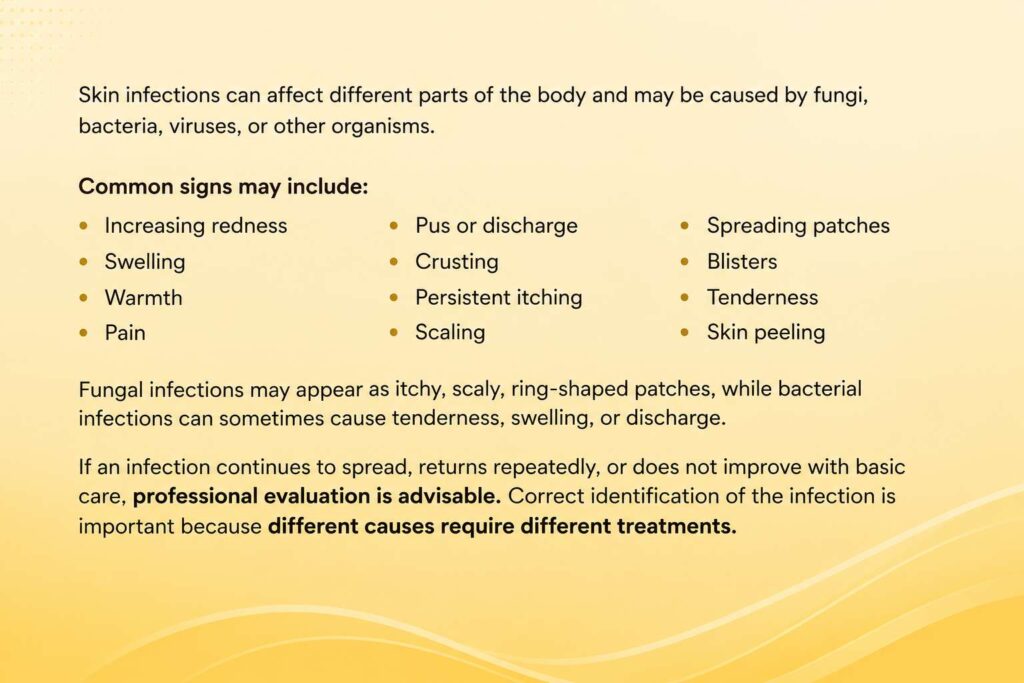
Skin infections can affect different parts of the body and may be caused by fungi, bacteria, viruses, or other organisms.
Common signs may include:
- Increasing redness
- Swelling
- Warmth
- Pain
- Pus or discharge
- Crusting
- Persistent itching
- Scaling
- Spreading patches
Fungal infections may appear as itchy, scaly, ring-shaped patches, while bacterial infections can sometimes cause tenderness, swelling, or discharge.
If an infection continues to spread, returns repeatedly, or does not improve with basic care, professional evaluation is advisable. Correct identification of the infection is important because different causes require different treatments.
Pigmentation and Uneven Skin Tone
People concerned about dark patches, pigmentation, or uneven skin tone may also benefit from professional assessment.
Pigmentation can occur for several reasons, including:
- Sun exposure
- Hormonal changes
- Acne
- Skin inflammation
- Certain medications
- Previous injuries
- Some underlying skin conditions
Common pigmentation concerns include melasma, post-inflammatory hyperpigmentation, freckles, and sun-related spots.
A skin clinic can assess the type and cause of pigmentation before recommending treatment. Options may include topical treatments, sun protection, chemical peels, laser-based procedures, or other approaches depending on the condition.
Treatment should be individualized because pigmentation does not have one universal solution.
Who Should Visit a Skin Clinic for Mole Changes
Changes in moles deserve attention, especially when they are new or noticeably different.
You should consider professional assessment if a mole:
- Changes in size
- Changes in shape
- Develops irregular borders
- Changes significantly in colour
- Becomes painful or persistently itchy
- Bleeds without an obvious injury
- Develops unusual crusting
- Looks substantially different from your other moles
These signs do not automatically mean that a mole is dangerous. However, changes should be evaluated rather than ignored.
A professional examination can determine whether the mole should simply be monitored or requires further investigation.
Hair Loss and Scalp Problems
Hair and scalp concerns are another reason who should visit a skin clinic becomes an important question.
Hair loss may occur temporarily or progressively. Some people experience increased shedding, while others notice thinning in specific areas.
Possible concerns include:
- Excessive hair shedding
- Receding hairline
- Thinning hair
- Patchy hair loss
- Scalp itching
- Flaking
- Scalp redness
- Recurrent dandruff
- Scalp infections
Hair loss can have numerous possible causes, and treatment depends on identifying the underlying issue. A professional assessment can help distinguish between different types of hair loss and determine whether further testing is appropriate.
Excessive Dryness, Scaling, or Cracking
Dry skin is common, particularly when environmental conditions, bathing habits, skincare products, or other factors affect the skin barrier.
Occasional dryness may improve with a gentle moisturizer and appropriate skincare. However, persistent dryness accompanied by redness, severe itching, cracking, bleeding, or thick scaling may require professional assessment.
People with recurring dry skin may need guidance about:
- Suitable cleansers
- Moisturizer selection
- Bathing habits
- Skin barrier protection
- Irritant avoidance
- Treatment of underlying conditions
Excessive Sweating and Body Odour Concerns
Excessive sweating can interfere with daily activities, confidence, work, and social interactions.
Some people sweat significantly more than expected, particularly from the:
- Underarms
- Palms
- Soles
- Face
This condition is sometimes referred to as hyperhidrosis.
If excessive sweating is persistent or affecting your quality of life, professional evaluation can be useful. Depending on the cause and severity, treatment options may include topical products, medications, injections, or other medical approaches.
Who Should Visit a Skin Clinic for Scars
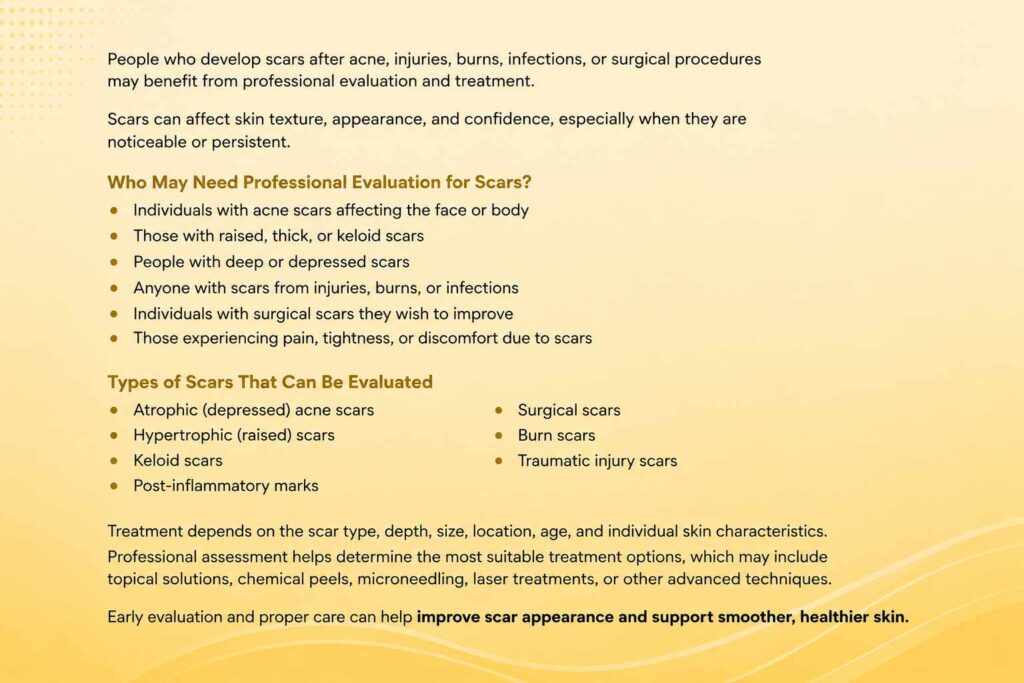
People who develop scars after acne, injuries, burns, infections, or surgical procedures may seek professional advice about improving their appearance.
Different types of scars include:
- Depressed acne scars
- Raised scars
- Thick scars
- Post-inflammatory marks
- Surgical scars
Treatment depends on the scar type, depth, location, age, and individual skin characteristics.
Possible professional approaches may include topical treatments, chemical peels, microneedling, laser procedures, or other techniques.
Children and Teenagers May Also Need Skin Care
Children and teenagers can develop several skin conditions that require professional attention.
Parents may consider a consultation when a child develops:
- Persistent eczema
- Recurrent rashes
- Fungal infections
- Warts
- Severe acne
- Unexplained itching
- Hair loss
- Persistent scalp problems
- Changing moles
Teenagers frequently experience acne because of hormonal changes. Early management may help reduce inflammation and minimize the risk of long-term scarring.
Skin Changes During Different Life Stages
Skin naturally changes with age and hormonal fluctuations. Teenagers may experience increased oil production and acne, while adults may notice pigmentation, dryness, or signs of photoaging.
During adulthood, people may be concerned about:
- Fine lines
- Uneven pigmentation
- Loss of skin elasticity
- Dryness
- Sun damage
- Acne
- Hair thinning
Older adults may experience increased dryness, fragile skin, changing growths, or other age-related skin concerns.
Benefits of Visiting a Skin Clinic
Understanding who should visit a skin clinic is also about recognizing the benefits of professional evaluation.
Accurate Assessment
Skin conditions can look similar even when their causes are different. Professional assessment can help identify the likely condition.
Personalized Treatment
Treatment can be selected according to the individual’s skin type, symptoms, medical history, and treatment goals.
Early Detection
Some skin changes are easier to manage when identified early.
Prevention of Complications
Appropriate treatment may help reduce the risk of persistent inflammation, infection, pigmentation, or scarring.
Better Skincare Guidance
Professional advice can help you choose suitable cleansers, moisturizers, sunscreens, and other skincare products.
What Happens During a Skin Clinic Consultation
If you are unsure who should visit a skin clinic, it can help to know what a typical consultation involves.
The process may include:
- Discussion of your main concern.
- Review of how long the symptoms have been present.
- Examination of the affected skin, hair, nails, or scalp.
- Review of relevant medical or skincare history.
- Identification of possible triggers.
- Diagnosis or assessment of the condition.
- Recommendation of appropriate treatment.
- Guidance about skincare and follow-up.
Additional tests may sometimes be recommended when the diagnosis is unclear or when a particular condition requires further investigation.
How to Prepare for Your Appointment
Before visiting a skin clinic, consider noting:
- When the problem first appeared
- Whether it is getting better or worse
- Products currently being used
- Previous treatments
- Known allergies
- Medications or supplements being taken
- Possible triggers
- Any changes in diet, lifestyle, or environment
If a condition appears and disappears, photographs taken during an active episode may also be helpful for discussion.
Common Mistakes to Avoid
Common mistakes include:
- Picking or squeezing acne
- Using too many skincare products
- Applying unprescribed steroid creams
- Ignoring changing moles
- Scratching persistent rashes
- Using harsh exfoliants on irritated skin
- Treating every rash as a fungal infection
- Following unverified online remedies
- Stopping treatment too early
- Skipping sun protection
Simple skincare is often preferable to constantly changing products. If a concern persists, professional evaluation can be more useful than repeatedly experimenting with home remedies.
Everyday Tips for Healthier Skin
Helpful habits include:
- Cleanse the skin gently.
- Use a moisturizer appropriate for your skin type.
- Apply broad-spectrum sunscreen when exposed to sunlight.
- Avoid excessive scrubbing.
- Do not pick pimples or skin lesions.
- Keep makeup tools clean.
- Avoid products that repeatedly irritate your skin.
- Maintain good scalp hygiene.
- Stay adequately hydrated.
- Follow prescribed treatments consistently.
Skincare should be simple, consistent, and appropriate for your individual needs.
When Should You Seek Prompt Skin Evaluation
Some skin symptoms deserve quicker attention.
Seek professional assessment when you notice:
- A rapidly changing skin growth
- Persistent unexplained bleeding
- A spreading infection
- Significant swelling
- Severe or rapidly worsening pain
- A widespread unexplained rash
- Skin changes associated with other concerning symptoms
- Sudden or significant hair loss
Prompt assessment does not necessarily mean the condition is serious. It simply allows potential problems to be evaluated without unnecessary delay.
Who Should Visit a Skin Clinic? Key Takeaways
So, who should visit a skin clinic? Anyone with a persistent, recurring, unexplained, or concerning skin, hair, scalp, or nail problem may benefit from professional assessment.
You do not have to wait until a condition becomes severe. Early attention can help identify the cause, guide appropriate treatment, and reduce the likelihood of complications.
A skin clinic may be appropriate for concerns such as acne, pigmentation, rashes, infections, excessive dryness, hair loss, scalp disorders, excessive sweating, scars, and changing moles.
The most appropriate treatment depends on the specific condition, its severity, and your individual needs. Avoid self-diagnosing persistent problems or repeatedly using treatments without understanding their potential effects.
Conclusion
Knowing who should visit a skin clinic can help you make informed decisions about your skin and dermatological care. Persistent acne, unexplained rashes, pigmentation, infections, hair loss, changing moles, excessive sweating, and recurring scalp problems are among the concerns that may benefit from professional assessment.
You do not need to wait until a skin condition becomes severe before seeking advice. Appropriate evaluation can help identify the cause and support a treatment plan suited to your needs. For people seeking professional skin care in Thrissur, timely attention to persistent or changing skin concerns can be an important step toward healthier skin. For reliable information about common skin conditions and treatment, you can refer to the American Academy of Dermatology (AAD), which provides evidence-based guidance on a wide range of dermatological concerns.
Frequently Asked Questions

Dr. Arathy Jerald
Dermatologist & Cosmetologist
Dr. Arathy Jerald is an experienced dermatologist and cosmetologist known for providing personalized skin and hair treatments. She focuses on combining medical dermatology with advanced aesthetic procedures to help patients achieve healthy and radiant skin.
Her approach emphasizes understanding each patient's unique concerns and creating customized treatment plans that enhance both skin health and natural beauty.
Revive Skin & Cosmetology Clinic, Palakkad, Kerala

