
Skin Allergy Treatment in Palakkad: A Complete Guide for Healthy Skin
Skin allergies can be uncomfortable, irritating, and sometimes confusing. A rash may appear suddenly after using a new soap, wearing jewellery, applying hair dye, eating certain foods, or coming into contact with dust, sweat, plants, or chemicals. Many people search for skin allergy treatment in Palakkad when itching, redness, swelling, or repeated rashes do not settle with basic home care.
A skin allergy may look like a simple surface problem, but it can have different causes. Some allergies happen due to direct contact with a product. Some are linked to the body’s immune response. Others may be worsened by weather, sweating, stress, or sensitive skin. This is why proper diagnosis is important before applying creams or medicines.
A dermatologist can examine the skin, understand the trigger pattern, identify the type of allergy, and suggest treatment that suits the patient’s skin type and condition. With the right care, most skin allergies can be controlled and future flare-ups can be reduced.
What Is a Skin Allergy?
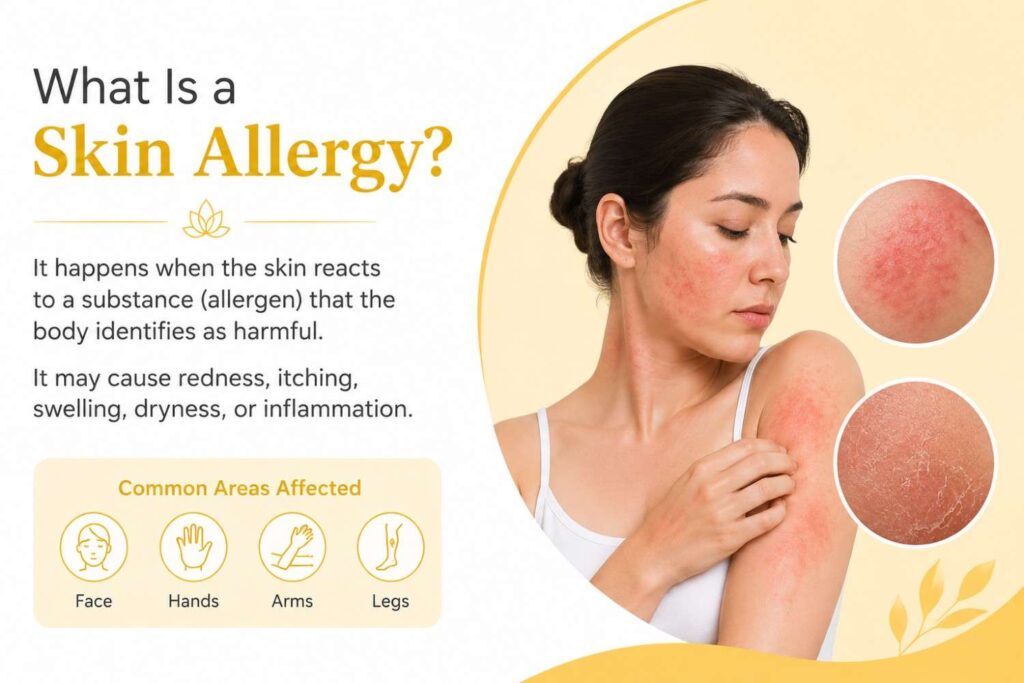
A skin allergy happens when the skin reacts to a substance that the body identifies as harmful. This substance is called an allergen. When the immune system reacts to the allergen, the skin may become red, itchy, swollen, dry, cracked, or inflamed.
Skin allergy can affect different parts of the body, including:
- Face
- Neck
- Hands
- Arms
- Legs
- Underarms
- Scalp
- Eyelids
- Lips
- Feet
- Skin folds
Some allergies appear only in one area, while others may spread. For example, a jewellery allergy may appear around the neck or ears, while a soap allergy may affect the hands or body. Hair dye allergy may affect the scalp, forehead, ears, or neck.
Proper skin allergy treatment in Palakkad starts with identifying where the allergy appears, when it happens, and what may be triggering it.
Common Symptoms of Skin Allergy
Skin allergy symptoms can vary from mild to severe. Some people may experience only itching, while others may develop swelling, blisters, or repeated flare-ups.
Common symptoms include:
- Itching
- Red patches
- Rashes
- Dryness
- Peeling skin
- Burning sensation
- Swelling
- Small bumps
- Blisters
- Cracked skin
- Scaling
- Skin darkening after scratching
- Skin sensitivity
- Pain or discomfort
- Oozing in severe cases
If the itching continues for many days or the rash keeps returning, it is better to consult a dermatologist. Early skin allergy treatment in Palakkad can help reduce discomfort and prevent complications such as infection or pigmentation.
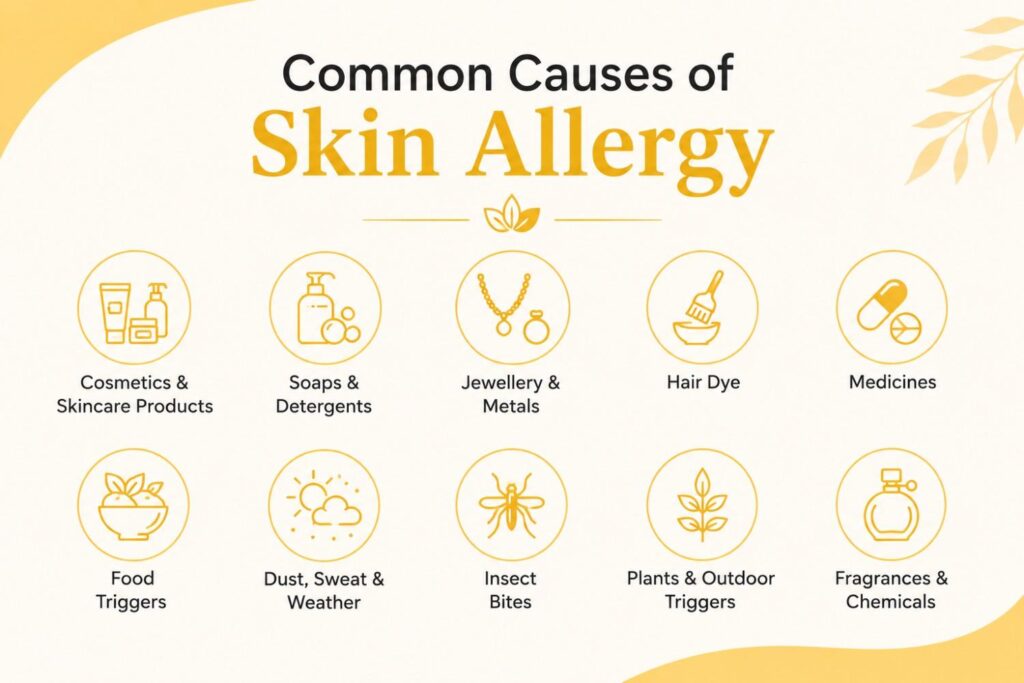
Common Causes of Skin Allergy
Skin allergies can be caused by many everyday items. Sometimes the trigger is easy to identify, but in many cases, it needs careful observation and medical evaluation.
1. Cosmetics and Skincare Products
Face creams, makeup, sunscreen, perfumes, serums, fairness creams, deodorants, and moisturizers can trigger allergic reactions in sensitive skin. Some people may develop rashes after using a new product, while others may react after repeated use.
2. Soaps and Detergents
Harsh soaps, hand washes, washing powders, dishwashing liquids, sanitizers, and floor cleaners may irritate the skin barrier. This is common in people who wash their hands frequently or work with cleaning agents.
3. Dust, Sweat, and Weather
Heat, humidity, sweat, dust, and weather changes can worsen itching and rashes. People with sensitive skin or eczema may notice flare-ups during certain seasons.
4. Medicines
Some tablets, injections, creams, or ointments may cause allergic rashes. A medicine-related rash should not be ignored, especially if it spreads quickly or is associated with fever, swelling, or breathing difficulty.
6. Food Triggers
Certain foods may trigger hives or itching in sensitive individuals. Food allergy reactions may appear quickly and sometimes involve swelling of the lips, face, or eyes.
Types of Skin Allergies
Different types of skin allergy need different treatment approaches. A dermatologist can identify the type based on symptoms, history, and examination.
Urticaria or Hives
Hives are raised, itchy welts that may appear suddenly and disappear within hours. They can come back in different areas of the body.
Possible triggers include:
- Food
- Medicines
- Infections
- Stress
- Heat
- Cold
- Pressure on the skin
- Insect bites
Hives can be very itchy and uncomfortable. If hives are associated with swelling of the lips, face, or breathing difficulty, urgent care is needed.
Atopic Dermatitis
Atopic dermatitis, also called eczema, is a long-term condition that causes dry, itchy, inflamed skin. It can affect children and adults. People with eczema often have sensitive skin and may experience repeated flare-ups.
Common symptoms include:
- Dry skin
- Intense itching
- Red patches
- Cracked skin
- Thickened skin after scratching
- Repeated flare-ups
Contact Dermatitis
Contact dermatitis happens when the skin reacts after touching an irritant or allergen. It may appear as itching, redness, dryness, swelling, or blisters.
Common triggers include:
- Soaps
- Detergents
- Cosmetics
- Jewellery
- Hair dye
- Fragrances
- Cleaning agents
- Rubber gloves
- Sanitizers
Contact dermatitis may affect the hands, face, neck, eyelids, or any area exposed to the trigger.
Drug Allergy Rash
A drug allergy rash can happen after taking certain medicines. It may appear as red patches, bumps, swelling, itching, or widespread rash. Some drug reactions can be serious, so medical evaluation is important.
Why Skin Allergy Should Not Be Ignored
A mild allergy may settle with simple care, but repeated or severe allergy should not be ignored. Scratching and inflammation can damage the skin barrier and make symptoms worse.
Untreated skin allergy may lead to:
- Skin infection
- Dark marks after scratching
- Thickened skin
- Sleep disturbance
- Repeated flare-ups
- Discomfort during work
- Spread of rash
- Delayed diagnosis
- Increased sensitivity
Seeking skin allergy treatment in Palakkad early can help control symptoms and reduce the chance of recurrence.
How Dermatologists Diagnose Skin Allergy
A dermatologist usually begins by asking detailed questions. The goal is to find the possible trigger and understand the pattern of allergy.
The doctor may ask:
- When did the rash start?
- Is there itching, burning, or pain?
- Did you use any new skincare product?
- Did you recently change soap, detergent, or hair dye?
- Is there any food or medicine history?
- Does the rash appear after sun exposure?
- Does sweating make it worse?
- Is there a history of eczema or asthma?
- Are there repeated flare-ups?
- Did you apply any cream before consultation?
The dermatologist then examines the affected area. In some cases, further tests such as patch testing may be advised, especially if the allergy is chronic or keeps returning.
Why Self-Medication Can Be Harmful
Many people apply random creams for itching or rashes. Some creams contain strong steroids, antifungals, or bleaching agents. They may give temporary relief but can worsen the skin if used wrongly.
Self-medication can cause:
- Skin thinning
- More irritation
- Worsening fungal infection
- Acne-like eruptions
- Delayed diagnosis
- Pigmentation
- Repeated flare-ups
- Dependence on creams
For safe skin allergy treatment in Palakkad, it is better to consult a dermatologist instead of using strong creams without guidance.
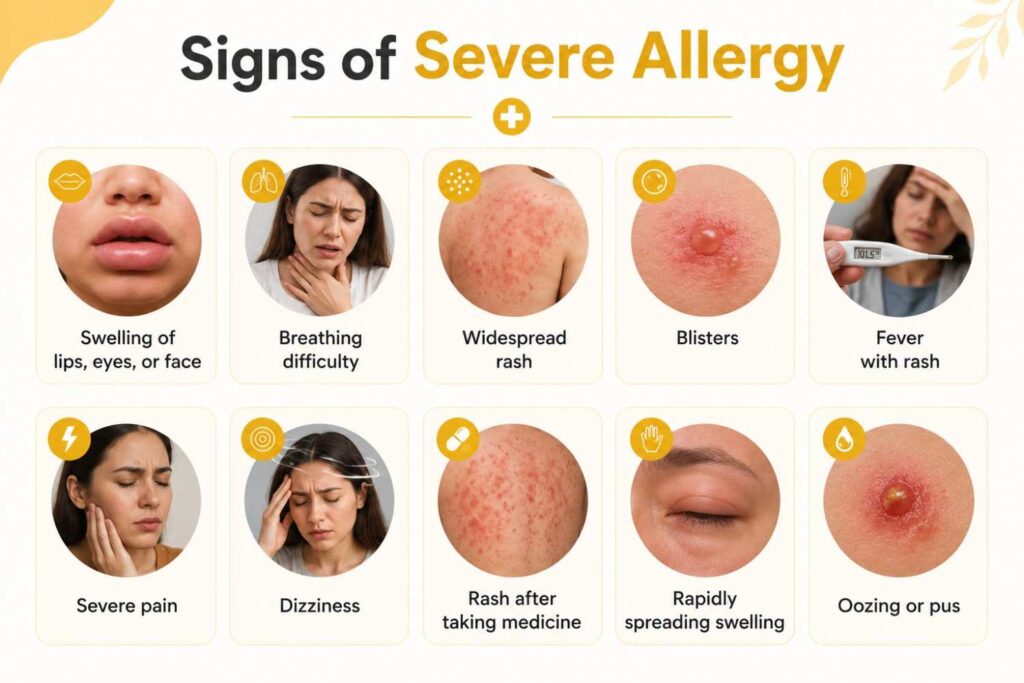
When to Seek Urgent Care
Some allergic reactions need immediate medical attention.
Seek urgent help if you notice:
- Swelling of lips, eyes, or face
- Breathing difficulty
- Widespread rash
- Blisters
- Fever with rash
- Severe pain
- Dizziness
- Rash after taking medicine
- Rapidly spreading swelling
- Oozing or pus
These symptoms may indicate a serious allergic reaction or infection.
Benefits of Dermatologist-Guided Skin Allergy Treatment
Choosing professional skin allergy treatment in Palakkad offers several benefits:
- Correct diagnosis
- Better trigger identification
- Safe medicine use
- Reduced itching and redness
- Lower risk of infection
- Prevention of repeated flare-ups
- Skin barrier repair
- Personalized skincare guidance
- Better long-term control
- Reduced chance of dark marks
A dermatologist can also guide patients on which products to avoid and which products are safe for their skin type.
Conclusion
Skin allergy treatment in Palakkad should begin with proper diagnosis and trigger identification. Itching, redness, swelling, dryness, rashes, and repeated flare-ups may have different causes, so treatment should not be based on guesswork.
A dermatologist can help calm the allergy, repair the skin barrier, identify triggers, and prevent future flare-ups. With the right medicines, gentle skincare, lifestyle changes, and follow-up care, skin allergies can be managed safely and comfortably.If you are dealing with repeated itching, rashes, swelling, or skin irritation, professional skin allergy treatment in Palakkad can help protect your skin and improve daily comfort.
To learn more about your suitability for Microneedling Treatment and explore personalized treatment options, visit American Academy of Dermatology
FREQUENTLY ASKED QUESTIONS

Dr. Arathy Jerald
Dermatologist & Cosmetologist
Dr. Arathy Jerald is an experienced dermatologist and cosmetologist known for providing personalized skin and hair treatments. She focuses on combining medical dermatology with advanced aesthetic procedures to help patients achieve healthy and radiant skin.
Her approach emphasizes understanding each patient's unique concerns and creating customized treatment plans that enhance both skin health and natural beauty.
Revive Skin & Cosmetology Clinic, Palakkad, Kerala

