
Dermatology Clinic in Palakkad: Complete Skin & Hair Care Guide
A dermatology clinic in Palakkad is not only for treating visible skin problems. It is a place where skin, hair, scalp, and nail concerns are examined medically, diagnosed properly, and managed with suitable treatment plans. Many people try creams, home remedies, or beauty products before consulting a dermatologist, but repeated skin issues often need professional care.
Skin is the largest visible organ of the body, and it often reflects lifestyle, hormones, allergies, infections, stress, and environmental changes. A dermatology clinic helps patients understand what is really happening beneath the surface instead of treating only the outer appearance.
Whether the concern is acne, pigmentation, dandruff, hair fall, itching, rashes, scars, or aging-related changes, timely consultation can help prevent worsening and support healthier skin.
What Makes a Dermatology Clinic Different?
A dermatology clinic in Palakkad focuses on medical skin care. Unlike general beauty services, dermatology care starts with diagnosis. The dermatologist checks the skin condition, asks about symptoms, understands the history, and then suggests treatment.
Dermatology is connected with both health and appearance. For example, acne may affect confidence, but it is also a medical condition involving blocked pores, oil glands, bacteria, and inflammation. DermNet describes acne as a common chronic disorder that affects the hair follicle and sebaceous gland, causing blockage and inflammation.
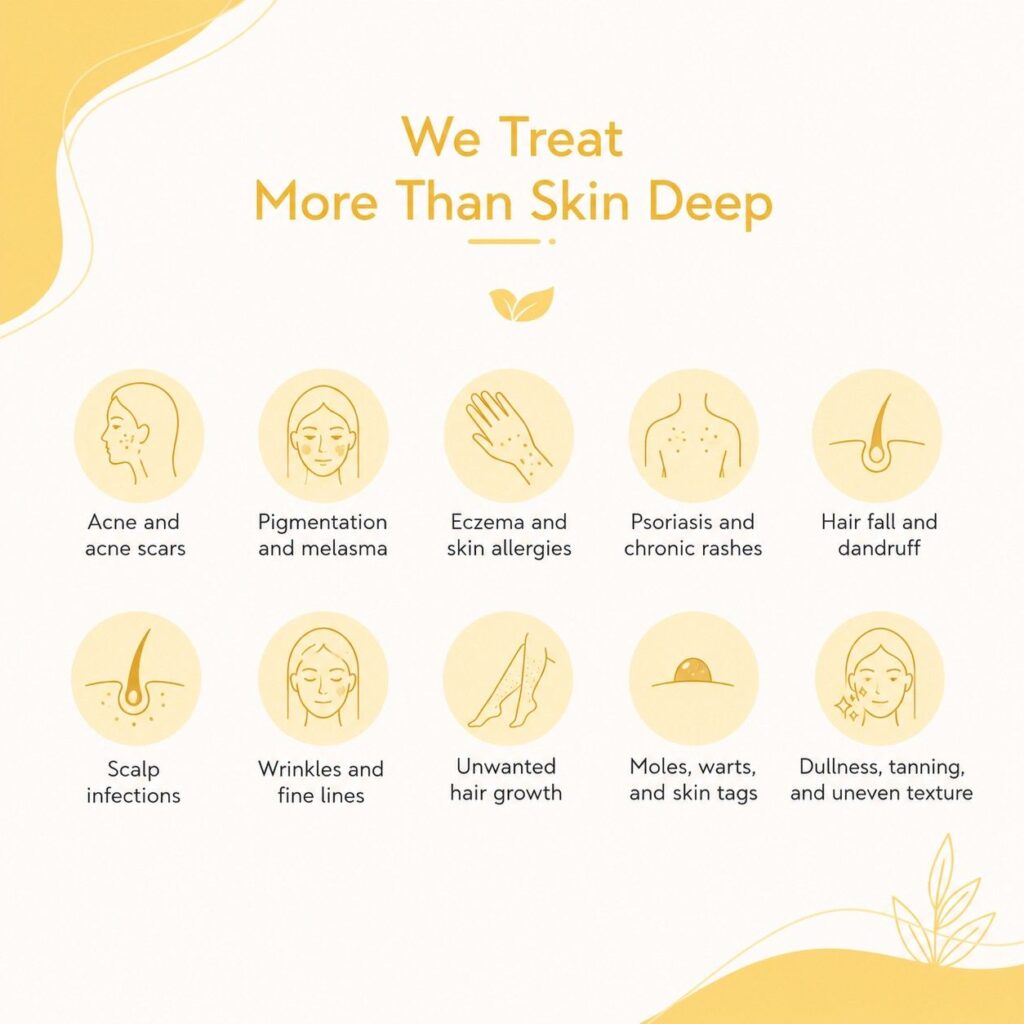
A dermatology clinic may provide care for:
- Skin infections
- Acne and acne marks
- Pigmentation problems
- Eczema and dermatitis
- Psoriasis
- Hair fall
- Dandruff
- Nail infections
- Wart and mole evaluation
- Cosmetic skin concerns
When Should You Visit a Dermatology Clinic in Palakkad?
Many people wait until a skin problem becomes severe. But early care can make treatment easier and more effective.
You may need to visit a dermatology clinic in Palakkad if you notice:
- Pimples that keep coming back
- Itching that lasts for many days
- Skin redness, swelling, or burning
- Dark spots after acne or injury
- Sudden increase in hair fall
- Dandruff with itching or flakes
- White patches or color changes
- Rashes after using skincare products
- Dry, cracked, or peeling skin
- Painful boils or skin infections
- Changes in moles or skin growths
- Scars affecting skin texture
Small symptoms should not always be ignored. Some skin conditions may look mild in the beginning but become difficult to manage if delayed.
Common Skin Problems Treated in a Dermatology Clinic
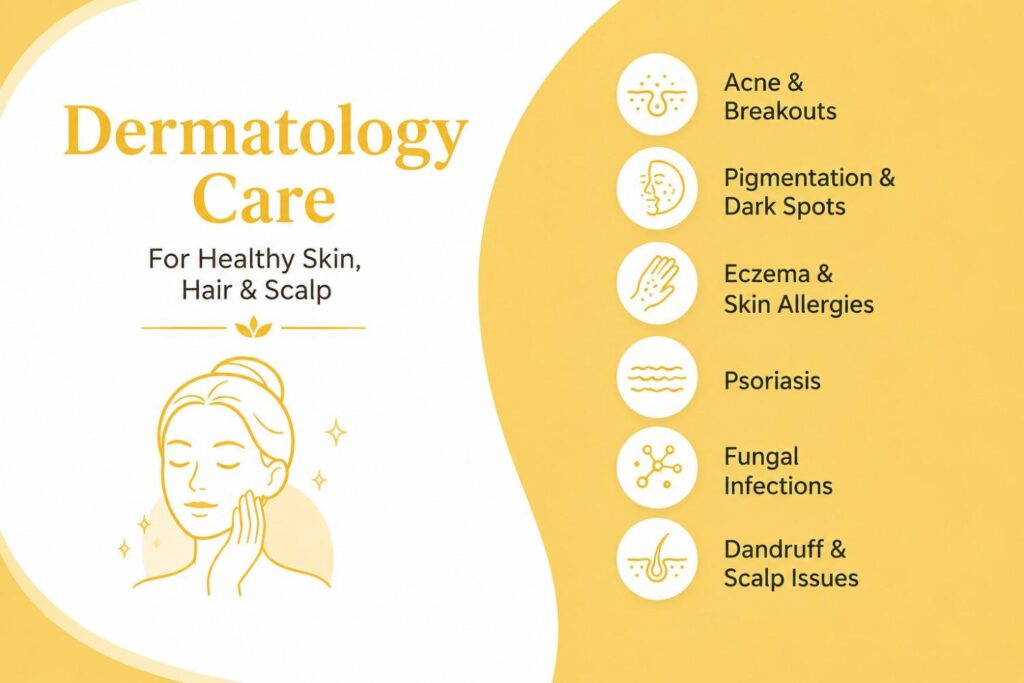
Acne and Breakouts
Acne is one of the most common reasons people visit a dermatology clinic in Palakkad. It can appear as blackheads, whiteheads, red bumps, painful pimples, or cystic acne.
Acne may be caused by:
- Excess oil production
- Blocked pores
- Hormonal changes
- Stress
- Certain cosmetics
- Diet and lifestyle factors
- Bacterial activity
- Family tendency
The American Academy of Dermatology recommends gentle skin care and oil-free products for acne-prone skin because oily products can clog pores and worsen breakouts.
Pigmentation and Dark Spots
Pigmentation is another common concern. It may appear as brown patches, acne marks, tanning, melasma, or uneven skin tone.
A dermatology clinic in Palakkad can help identify whether pigmentation is due to sun exposure, hormonal changes, acne marks, inflammation, or product irritation. DermNet notes that post-inflammatory pigmentation can appear as light brown to black patches and may become darker with sun exposure.
Eczema and Skin Allergies
Eczema may cause itching, dryness, redness, cracks, or repeated flare-ups. Some people experience skin allergy after using cosmetics, hair dye, perfumes, jewelry, or detergents.
A dermatologist may suggest medicines, moisturizers, trigger control, and skin barrier repair.
Psoriasis
Psoriasis is a long-term skin condition that may cause red, scaly, thick patches on the skin. It may affect the scalp, elbows, knees, palms, soles, or nails. The American Academy of Dermatology explains that psoriasis is often a lifelong condition and dermatologists usually focus on reducing flare-ups, identifying triggers, and treating symptoms as needed.
Fungal Infections
Fungal infections are common in warm and humid climates. They may appear as ring-shaped patches, itching, scaling, or discoloration. Self-treatment with steroid-mixed creams can worsen fungal infections, so proper diagnosis is important.
Dandruff and Scalp Issues
Dandruff may look simple, but repeated flaking, itching, redness, or oily scales may be linked to seborrheic dermatitis. DermNet describes seborrheic dermatitis as a common, chronic, or relapsing form of dermatitis that mainly affects the scalp, face, and trunk.A dermatology clinic in Palakkad can help manage dandruff, scalp infections, itching, and hair fall linked to scalp inflammation.
Hair Concerns Managed by Dermatologists
Hair fall can happen for many reasons. A dermatologist does not treat every hair fall case in the same way. The cause is first identified.
Common reasons include:
- Nutritional deficiency
- Stress
- Thyroid imbalance
- Hormonal changes
- Post-fever hair shedding
- Dandruff
- Scalp infection
- Genetic hair thinning
- Harsh hair treatments
- Certain medicines
A dermatology clinic in Palakkad may suggest scalp examination, blood tests if needed, medicines, anti-dandruff care, PRP therapy, or hair growth support depending on the condition.
Cosmetic Concerns Treated in a Dermatology Clinic
A modern dermatology clinic in Palakkad may also offer cosmetic dermatology treatments. These treatments are planned to improve skin texture, tone, glow, and aging signs safely.
Cosmetic concerns may include:
- Dull skin
- Open pores
- Fine lines
- Wrinkles
- Acne scars
- Uneven skin tone
- Tanning
- Skin laxity
- Under-eye concerns
- Rough skin texture
Treatments may include chemical peels, laser procedures, microdermabrasion, microneedling, skin tightening, anti-aging treatments, and medical-grade skincare.
Why Diagnosis Is More Important Than Random Creams
Many patients use creams suggested by friends, online videos, or pharmacy counters. This can sometimes create new problems. For example, steroid creams may reduce redness temporarily but may cause thinning, stretch marks, visible blood vessels, acne-like eruptions, or worsening infections if used incorrectly. DermNet lists skin thinning, stretch marks, easy bruising, enlarged blood vessels, and increased hair growth as possible side effects of topical steroid misuse.
A dermatology clinic in Palakkad helps avoid this by giving treatment based on skin type, diagnosis, severity, age, lifestyle, and medical background.
Types of Treatments Available
A dermatology clinic in Palakkad may offer different types of treatment depending on the condition.
1. Medical Treatments
These may include creams, tablets, lotions, shampoos, anti-allergy medicines, antifungal medicines, acne medicines, or anti-inflammatory care.
2. Procedural Treatments
Procedures may be advised for scars, pigmentation, warts, moles, skin tags, unwanted hair, or rejuvenation.
- Chemical peels
- Laser treatment
- Mole evaluation and removal
- Scar revision procedures
- PRP therapy
- Microneedling
- Skin rejuvenation treatment
Maintenance Care
Some conditions need follow-up and maintenance. Acne, pigmentation, psoriasis, eczema, dandruff, and hair fall may improve with treatment but can return if triggers are not managed.
Why Dermatology Care Builds Confidence
Skin and hair concerns can affect daily life more than people realize. Acne may make someone avoid photos. Hair fall may create stress. Pigmentation may reduce confidence. Itching or rashes may disturb sleep. Chronic skin conditions may affect mood and social comfort.
A dermatology clinic in Palakkad helps by treating the condition and guiding patients with realistic expectations. The goal is not only clearer skin but also better comfort, awareness, and confidence.
Conclusion
A dermatology clinic in Palakkad plays an important role in diagnosing and treating skin, hair, scalp, nail, and cosmetic concerns with proper medical guidance. Instead of depending on random creams or temporary fixes, dermatology care focuses on understanding the cause and choosing suitable treatment.
From acne, pigmentation, eczema, dandruff, and hair fall to scars, aging concerns, and skin rejuvenation, the right clinic can help patients manage their concerns safely and confidently. If a skin or hair issue keeps returning, spreading, itching, or affecting daily comfort, visiting a dermatology clinic in Palakkad can be a smart step toward healthier skin and better self-confidence.
To learn more about your suitability for Microneedling Treatment and explore personalized treatment options, visit American Academy of Dermatology
FREQUENTLY ASKED QUESTIONS

Dr. Arathy Jerald
Dermatologist & Cosmetologist
Dr. Arathy Jerald is an experienced dermatologist and cosmetologist known for providing personalized skin and hair treatments. She focuses on combining medical dermatology with advanced aesthetic procedures to help patients achieve healthy and radiant skin.
Her approach emphasizes understanding each patient's unique concerns and creating customized treatment plans that enhance both skin health and natural beauty.
Revive Skin & Cosmetology Clinic, Palakkad, Kerala

