
Choosing the right doctor involves checking dermatology experience, PRP-specific training, treatment protocol transparency, and follow-up care. Learn more
What Terms Should I Know About PRP?
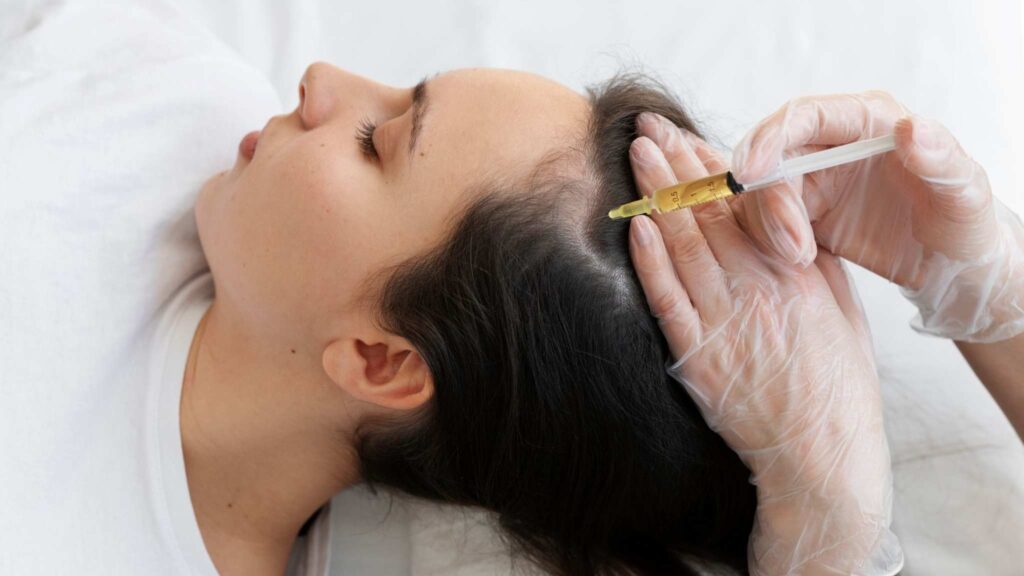
If you are exploring PRP hair treatment in Palakkad, understanding the commonly used PRP-related terms can help you make informed decisions and feel more confident during consultation and treatment. PRP (Platelet-Rich Plasma) therapy involves several medical and dermatological concepts that are often mentioned during evaluation, preparation, and treatment sessions. Knowing these terms will help you better understand how PRP works, what to expect, and how results are measured.
This page explains the most important PRP hair treatment terms in simple language, focusing only on hair-related PRP concepts.
Platelet-Rich Plasma (PRP)
Platelet-Rich Plasma, commonly known as PRP, is a concentrated form of plasma derived from your own blood. It contains a higher-than-normal concentration of platelets, which are rich in growth factors. In hair treatment, PRP is used to stimulate hair follicles, improve scalp health, and promote natural hair regrowth.
Platelets
Platelets are tiny blood cells that play a key role in healing and tissue repair. They release growth factors that help regenerate cells and improve blood supply. In PRP hair therapy, platelets are the active component responsible for strengthening hair follicles and extending the hair growth phase.
Plasma
Plasma is the liquid portion of blood that carries platelets, red blood cells, white blood cells, nutrients, and proteins. In PRP preparation, plasma is separated and concentrated to obtain platelet-rich plasma used for scalp injections.
Growth Factors
Growth factors are proteins released by platelets that stimulate cell repair, regeneration, and blood vessel formation. In PRP hair treatment, growth factors help revive inactive hair follicles, improve follicle nourishment, and encourage healthier hair growth.
Centrifugation
Centrifugation is the process used to separate PRP from whole blood. The blood sample is placed in a centrifuge machine, which spins at high speed to separate red blood cells, plasma, and platelets. The platelet-rich portion is then collected for treatment.
Hair Follicles
Hair follicles are tiny structures in the scalp from which hair grows. PRP therapy targets weakened or dormant hair follicles by delivering growth factors directly into the scalp, helping them return to an active growth phase.
Dormant Hair Follicles
Dormant follicles are hair follicles that are alive but not actively producing hair. PRP works best at this stage by reactivating these follicles before permanent hair loss occurs.
Androgenetic Alopecia
Androgenetic alopecia is the medical term for pattern hair loss. It is one of the most common reasons PRP is recommended. PRP helps slow down hair thinning and strengthens existing hair but does not create new follicles.
Diffuse Hair Thinning
Diffuse hair thinning refers to overall hair density reduction across the scalp rather than bald patches. PRP is commonly used to improve hair thickness and reduce excessive shedding in such cases.
Anagen Phase
The anagen phase is the active growth phase of the hair cycle. PRP helps prolong the anagen phase, allowing hair to grow longer, thicker, and stronger.
Telogen Phase
The telogen phase is the resting phase of hair growth, during which hair shedding occurs. PRP therapy helps reduce excessive shedding by shifting follicles back into the anagen phase.
Hair Density
Hair density refers to the number of hair strands per square centimeter of scalp. PRP improves hair density over time by strengthening follicles and reducing hair fall.
Hair Shaft Thickness
Hair shaft thickness refers to the diameter of individual hair strands. PRP treatment can improve hair thickness, making hair appear fuller and healthier.
Scalp Vascularization
Scalp vascularization means blood circulation to the scalp. PRP improves vascularization by promoting new blood vessel formation, ensuring better oxygen and nutrient supply to hair follicles.
Microneedling (Adjunct Term)
Microneedling is sometimes combined with PRP to enhance absorption and stimulate collagen production in the scalp. Tiny needles create microchannels that allow PRP to penetrate deeper into the scalp.
Injection Technique
PRP hair treatment involves injecting PRP into specific areas of the scalp using fine needles. Proper injection technique ensures even distribution and optimal results.
Session
A PRP session refers to one complete treatment sitting. Multiple sessions are usually required, spaced several weeks apart, to achieve noticeable results.
Maintenance Sessions
Maintenance sessions are follow-up PRP treatments done after the initial sessions to sustain results and prevent further hair thinning.
Autologous Treatment
Autologous means the treatment is derived from the patient’s own body. PRP is an autologous therapy, which reduces the risk of allergic reactions or rejection.
Biocompatibility
Biocompatibility refers to how well a treatment works with the body without causing adverse reactions. PRP is highly biocompatible because it is prepared from the patient’s own blood.
Minimal Downtime
Downtime refers to the recovery period after a procedure. PRP hair treatment has minimal downtime, allowing most individuals to resume normal activities the same day.
Hair Shedding Phase
Temporary hair shedding may occur after PRP as weak hairs fall out and stronger hair replaces them. This phase is usually short-lived and part of the natural hair cycle response.
Results Timeline
PRP results are gradual. Reduced hair fall may be noticed within weeks, while visible hair growth and improved density usually appear after a few months.
Suitability Assessment
Suitability assessment refers to the evaluation done before PRP to determine whether the treatment is appropriate based on hair loss type, scalp condition, and follicle viability.
Scalp Health
Scalp health includes factors such as oil balance, inflammation, dandruff, and infections. PRP improves scalp health by reducing inflammation and enhancing blood flow.
Non-Surgical Hair Treatment
PRP is classified as a non-surgical hair restoration method, making it a preferred option for individuals who want natural results without surgery or long-term medication.
Limitations of PRP
PRP does not create new hair follicles or reverse complete baldness. It works best in early to moderate hair loss where follicles are still alive.
Combination Therapy
PRP may be combined with other hair treatments such as topical solutions, supplements, or lifestyle changes for improved results.
Natural Hair Regrowth
Natural hair regrowth refers to hair restoration using the body’s own healing mechanisms rather than artificial implants or chemicals. PRP supports this process effectively.
Long-Term Hair Management
PRP is often part of a long-term hair management plan that focuses on slowing hair loss, improving hair quality, and maintaining scalp health.
Final Thoughts on PRP Hair Terminology
Understanding PRP-related terms helps set realistic expectations and improves communication during consultation and treatment planning. PRP hair therapy is a science-backed, minimally invasive solution that relies on natural biological processes to strengthen hair follicles and improve scalp health. Knowing these terms allows individuals to make informed choices and actively participate in their hair restoration journey.
For individuals considering PRP hair treatment in Palakkad, familiarity with these terms ensures clarity, confidence, and a better overall treatment experience.
Table of Content
PRP (Platelet-Rich Plasma) is a regenerative treatment that uses a patient’s own blood to promote natural healing, reduce inflammation, and repair damaged tissues without surgery. Learn more
PRP hair treatment is suitable for individuals experiencing early to moderate hair loss or thinning who want a non-surgical solution to strengthen hair and promote natural regrowth. Learn more
The cost of PRP treatment varies depending on the condition treated and the number of sessions required. Learn more
During a PRP consultation, you can expect a clear explanation of your hair condition, realistic treatment outcomes, and a personalized plan tailored to your hair regrowth goals. Learn more
Before starting PRP treatment for hair, you should ask about suitability, expected results, number of sessions required, safety, and post-treatment care to make an informed decision. Learn more
PRP hair treatment has minimal risks, mostly temporary, when performed under proper medical care. Learn more
Preparing properly for PRP therapy helps improve treatment comfort, safety, and overall hair health outcomes. Learn more
The PRP procedure involves drawing blood, processing it to concentrate platelets, and injecting the platelet-rich plasma into targeted areas of the scalp. Learn more
Recovery is usually minimal, with possible mild scalp tenderness or redness that settles within a short period. Learn more
Results may include reduced hair fall, improved hair thickness, and gradual stimulation of new hair growth over time. Learn more
Before-and-after results often show improved hair density, stronger strands, and better scalp coverage with repeated sessions. Learn more
Frequently Asked Questions
1. What does PRP mean in hair treatment?
PRP stands for Platelet-Rich Plasma, a treatment that uses concentrated platelets from your own blood to stimulate hair follicles and promote natural hair regrowth.
2. Why are platelets important in PRP hair therapy?
Platelets contain growth factors that help repair weakened hair follicles, improve scalp circulation, and support healthier hair growth.
3. What are growth factors in PRP treatment?
Growth factors are proteins released by platelets that stimulate cell regeneration, prolong the hair growth phase, and reduce hair shedding.
4. What is centrifugation in PRP?
Centrifugation is the process of spinning blood at high speed to separate platelet-rich plasma from other blood components.
5. What are dormant hair follicles?
Dormant hair follicles are inactive follicles that are still alive but not producing hair, and PRP helps reactivate them.
6. What is androgenetic alopecia?
Androgenetic alopecia is pattern hair loss caused by genetics and hormones, commonly treated with PRP to slow progression and strengthen hair.
7. What does hair density mean in PRP results?
Hair density refers to the number of hair strands per area of the scalp, which PRP helps improve over time.
8. What is the anagen phase of hair growth?
The anagen phase is the active growth stage of hair, and PRP helps extend this phase for stronger, longer hair.
9. What does autologous treatment mean?
Autologous treatment means the therapy uses material from your own body, making PRP safe and biocompatible.


Scroll to Top