
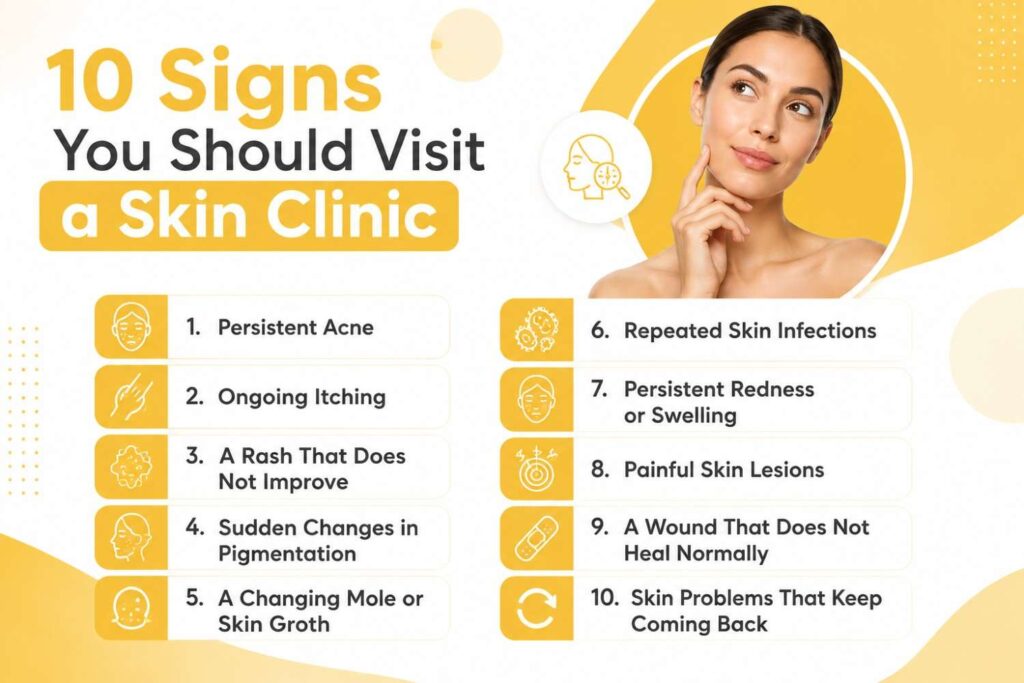
10 Signs You Should Visit a Skin Clinic
Your skin can often tell you when something needs attention. Persistent itching, recurring rashes, unusual pigmentation, severe acne, or changes in a mole may seem minor at first, but ongoing concerns deserve proper evaluation. Knowing the 10 Signs You Should Visit a Skin Clinic can help you recognize when everyday skin care may not be enough. For people seeking professional skin care in Palakkad, understanding these signs can make it easier to decide when to seek expert guidance.The skin is constantly exposed to sunlight, pollution, weather changes, allergens, microorganisms, and other environmental factors. Because of this, temporary irritation and occasional breakouts are common. However, symptoms that persist, return frequently, worsen, or affect your comfort should not simply be ignored.A skin clinic can help assess the possible cause of a concern and recommend an appropriate approach based on the condition, symptoms, and individual skin needs.
10 Signs You Should Visit a Skin Clinic
The following are some of the most common signs that professional skin evaluation may be useful.
1. Persistent Acne
Occasional pimples are common, but acne that continues for weeks or repeatedly returns may need professional attention.Persistent acne can include blackheads, whiteheads, pimples, and inflammatory breakouts. Repeated inflammation may also contribute to post-acne marks and certain types of scarring.A professional assessment can help identify factors contributing to the acne and determine whether basic skin care, topical treatment, medication, or another approach is appropriate.
2. Ongoing Itching
Persistent itching is another important sign among the 10 Signs You Should Visit a Skin Clinic.
Itching can have several possible causes, including:
- Dry skin
- Allergic reactions
- Irritation
- Eczema or dermatitis
- Fungal infections
- Other inflammatory skin conditions
Repeated scratching can further irritate the skin and may damage the skin surface. If itching continues despite basic skin care, professional evaluation can help identify the underlying cause.
3. A Rash That Does Not Improve
A temporary rash may settle on its own, particularly when caused by a short-term irritation. However, a rash that remains for several weeks, repeatedly returns, spreads, or becomes more uncomfortable deserves attention.Different types of rashes can have different causes. Allergies, infections, irritation, inflammatory conditions, and environmental triggers may all contribute to skin changes.Rather than repeatedly trying different home remedies, it can be more useful to determine what is causing the rash.
4. Sudden Changes in Pigmentation
Changes in skin color or pigmentation can occur for many reasons. Sun exposure, hormonal changes, inflammation, and other factors can contribute to uneven pigmentation.Not every pigmentation change indicates a serious problem. However, sudden, unusual, or persistent changes should be assessed appropriately.Professional evaluation can help determine whether the pigmentation is related to sun exposure, inflammation, hormonal factors, or another condition and whether any treatment is necessary.
5. A Changing Mole or Skin Groth
A noticeable change in a mole or skin growth is an important reason to consider professional skin evaluation.
Pay attention to changes such as:
- A noticeable change in size
- Changes in shape
- Changes in color
- New symptoms
- Significant changes over time
A changing skin growth does not automatically mean that something serious is present. However, unusual changes should not be dismissed without appropriate assessment.
6. Repeated Skin Infections
Recurring skin infections can indicate that an underlying issue needs attention. Bacterial, fungal, or viral infections may cause different patterns of redness, irritation, scaling, or other visible changes.Repeatedly treating an infection without understanding why it keeps returning may not address the underlying issue.A professional evaluation can help determine the likely type of condition and whether specific treatment or additional assessment is needed.
7. Persistent Redness or Swelling
Redness and swelling can occur after irritation, exposure to an allergen, or other temporary triggers. When these symptoms continue or repeatedly return, they may require closer evaluation.Persistent redness may be associated with inflammation, sensitivity, allergies, irritation, or other skin conditions.If the redness or swelling is affecting daily comfort or does not improve with basic skin care, seeking professional advice may be appropriate.
8. Painful Skin Lesions
Painful areas, lesions, or unusual skin changes should not be repeatedly ignored.The possible causes can vary significantly depending on the appearance, duration, location, and other symptoms. Professional assessment can help distinguish between different types of skin concerns.Avoid picking, squeezing, or repeatedly irritating painful lesions, as this can increase inflammation and may contribute to marks or scarring.
9. A Wound That Does Not Heal Normally
Most minor skin injuries gradually improve with appropriate care. A wound that does not appear to heal normally, continues to change, or repeatedly becomes irritated deserves professional attention.A non-healing wound can have several possible causes, so it is important to consider the overall health of the affected skin and the duration of the problem.Professional evaluation can help determine whether further assessment or treatment is appropriate.
10. Skin Problems That Keep Coming Back
Recurring skin problems are another key sign among the 10 Signs You Should Visit a Skin Clinic.If the same rash, acne, irritation, pigmentation concern, or infection repeatedly returns, simply treating each episode may not be enough. Identifying possible triggers and understanding the underlying condition can help with longer-term management.Recurring concerns may be related to:
- Skin care products
- Environmental exposure
- Allergies
- Hormonal changes
- Infections
- Chronic inflammatory conditions
- Lifestyle factors
Understanding the pattern can help guide a more suitable skin care approach.
Common Causes of Skin Problems
Understanding the causes behind common skin concerns is an important part of knowing the 10 Signs You Should Visit a Skin Clinic.
Skin problems can develop because of one factor or a combination of several factors.
Common causes include:
- Excessive sun exposure
- Hormonal changes
- Allergic reactions
- Bacterial infections
- Fungal infections
- Viral infections
- Dry skin
- Excessive oil production
- Blocked pores
- Environmental pollution
- Certain medications
- Stress and lifestyle factors
- Irritating skin care products
- Genetic factors
- Chronic inflammatory conditions
One symptom may also have multiple possible causes. For example, itching can result from dryness, allergy, irritation, infection, or another skin condition. This is why identifying the cause is often more useful than simply treating the visible symptom.
Symptoms You Should Not Ignore
The 10 Signs You Should Visit a Skin Clinic are particularly useful when symptoms persist or change over time.
Consider seeking professional advice if you notice:
- Persistent itching
- A rash that does not improve
- Repeated skin infections
- Sudden pigmentation changes
- A changing mole or skin growth
- A wound that does not heal normally
- Persistent redness or swelling
- Severe or recurring acne
- Painful skin lesions
- Unexplained scaling or crusting
- Symptoms that continue despite basic skin care
- A problem that repeatedly returns
These symptoms do not necessarily indicate a serious condition. Their importance depends on the underlying cause, duration, and severity.
What Treatments May Be Recommended?
There is no single treatment for every skin concern. The appropriate approach depends on the diagnosis and individual needs.
Possible treatment approaches may include:
- Gentle cleansing
- Moisturizers and barrier-supporting products
- Topical medications
- Anti-inflammatory treatments
- Antifungal treatments
- Acne medications
- Pigmentation management
- Prescription treatments
- Selected dermatological procedures
- Lifestyle and environmental modifications
Treatment should be selected according to the specific condition. Using a product or medication intended for another condition may sometimes increase irritation or make symptoms more difficult to assess.
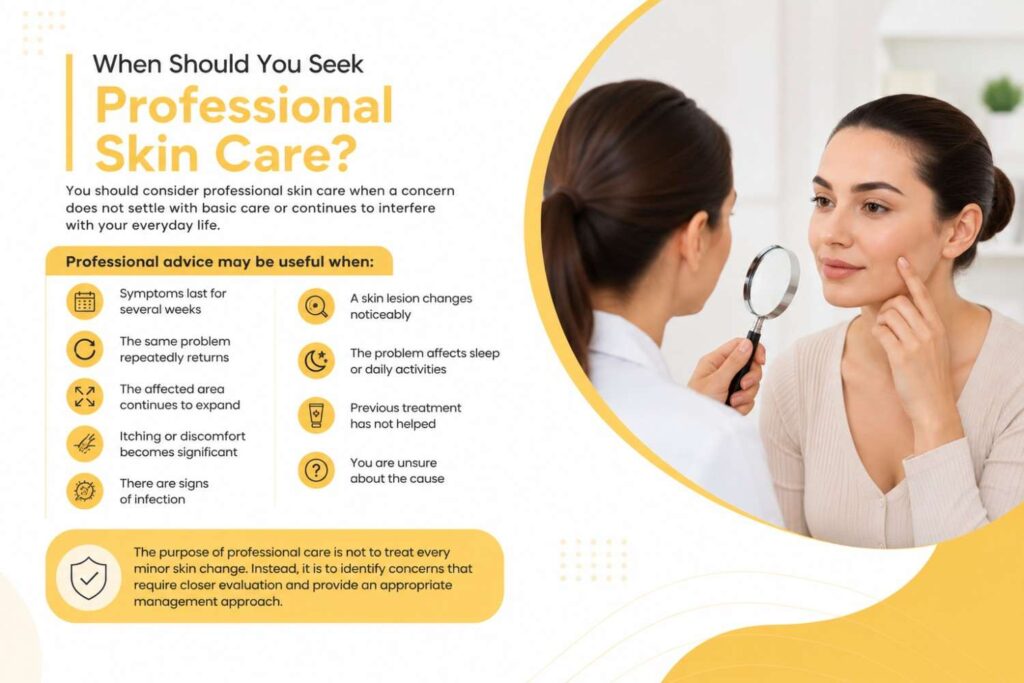
When Should You Seek Professional Skin Care?
You should consider professional skin care when a concern does not settle with basic care or continues to interfere with your everyday life.
Professional advice may be useful when:
- Symptoms last for several weeks
- The same problem repeatedly returns
- The affected area continues to expand
- Itching or discomfort becomes significant
- There are signs of infection
- A skin lesion changes noticeably
- The problem affects sleep or daily activities
- Previous treatment has not helped
- You are unsure about the cause
The purpose of professional care is not to treat every minor skin change. Instead, it is to identify concerns that require closer evaluation and provide an appropriate management approach.
Conclusion
Recognizing the 10 Signs You Should Visit a Skin Clinic can help you make more informed decisions about your skin health. Persistent acne, ongoing itching, recurring rashes, unusual pigmentation, changing skin growths, repeated infections, and other continuing concerns should receive appropriate attention rather than prolonged self-treatment.Professional evaluation can help identify the possible cause of a skin concern and determine whether observation, lifestyle changes, skin care, medication, or another treatment approach is suitable. Good skin health also depends on consistent daily care, sun protection, and awareness of changes over time. For those seeking professional skin care guidance in Palakkad, recognizing these signs can be a useful step toward timely and appropriate skin care.You can learn more about maintaining healthy skin and recognizing common skin conditions from the American Academy of Dermatology (AAD) .

Dr. Arathy Jerald
Dermatologist & Cosmetologist
Dr. Arathy Jerald is an experienced dermatologist and cosmetologist known for providing personalized skin and hair treatments. She focuses on combining medical dermatology with advanced aesthetic procedures to help patients achieve healthy and radiant skin.
Her approach emphasizes understanding each patient's unique concerns and creating customized treatment plans that enhance both skin health and natural beauty.
Revive Skin & Cosmetology Clinic, Palakkad, Kerala

